


Anne Lacaton: Qualities of inhabiting
The MCH24 Lacaton workshop tried to frame and discuss what the conditions for a good quality of living in the city were. Cities are expected to provide exceptional quality of life, offering a large range of facilities, proximities, and pleasures, as well as a wide variety of dwelling typologies to fit different needs, expectations, and ways of life: living in a public space, living in the neighborhood, living collectively within a close community, and living individually. Defining a set of principles is considered mandatory before designing architecture, especially dwellings. To do so, it is fundamental to hold a critical position.
The following list of Qualities of Inhabiting represent Anne Lacaton’s and Jean-Philippe Vassal’s design principles and close guidelines that are always present in their work, and brought into their teaching.
Generosity, Freespace and extra-space, Capacity of appropriation, Transparency, Inside-outside continuity, Movement, Open structure, Private outdoor space, Space of transition, Pleasure and imagination.
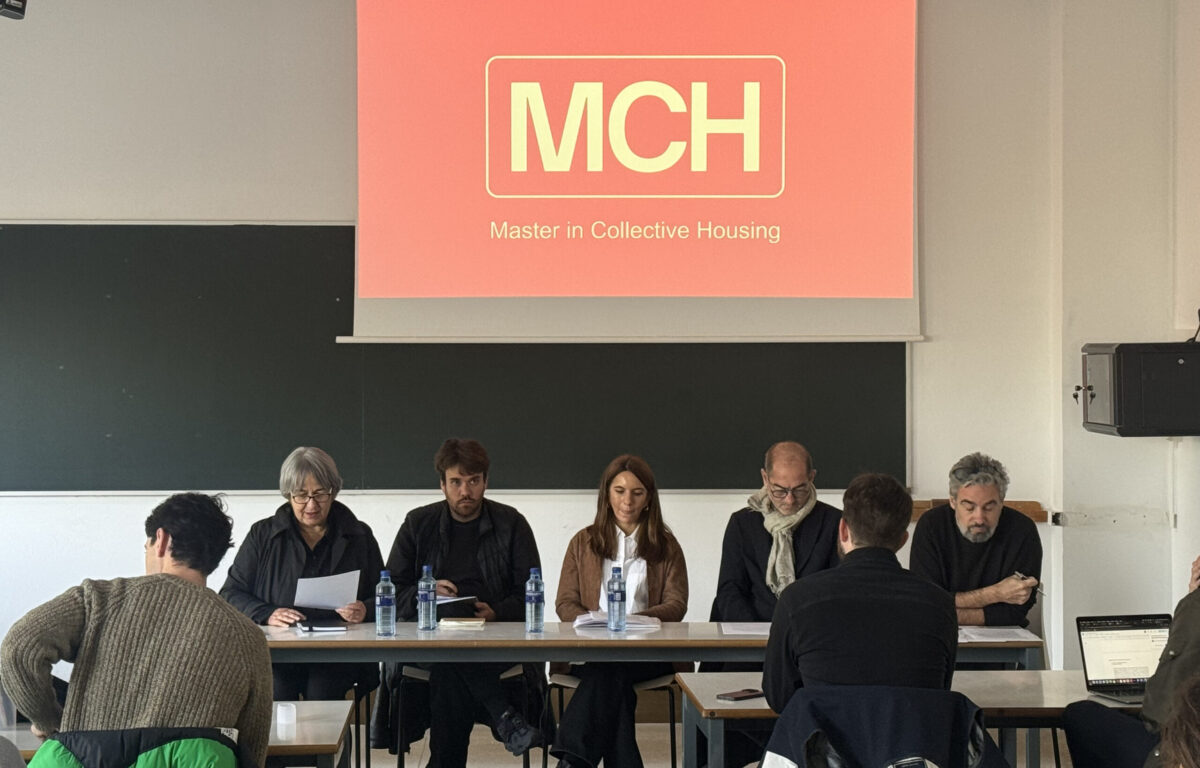
To ignite it, there was a set of five presentations given by Anne Lacaton and her guests. These touched on different interrelated topics, including support and infill, participation, freedom, comfort, and pleasure. Students prepared a set of questions for the following session about their preferred topics, as a reaction to the previous presentations. Each student within the team chose one topic and prepared at least one question. Themes included categories such as spatial qualities, participation, flexibility, demolition, resilience, sustainability, universal housing, etc.
- Anne Lacaton & Jean Philippe Vassal’s Architecture office
- Christoph Hutin’s Architecture office.
- Atmos Lab: In a context where human impact is leaving a costly imprint on its homeland, Atmos Lab helps architecture face the environmental challenges of our time with built-in common sense. Playing with temperature, sunlight or wind, they provide a climate-responsive frame of mind, and healthier solutions to build with: more efficient, more comfortable, more sustainable.
- Urban fragment observatory [ufo ufo] is a spatial research collective based in Berlin.
- CoLab is a teaching & research unit based in ETSAM, focused on designing urban prototypes for post-industrial cities, and treasuring collaboration as an alternative way to redefine and expand contemporary design practices.
- HouseEurope! is the European Citizens’ Initiative for new EU-laws to make renovation and transformation more easy, affordable and social. Because the demolition of existing buildings is as outdated as food waste, animal testing and single-use plastics.
At the end, each student synthesized the experience into a couple of sentences or a short paragraph, almost as the seed of a Housing Manifesto, trying to answer different architectural positions regarding the presentations.
Leader: Anne Lacaton
Assistant: Diego García-Setién
Lecturers: Christophe Hutin, Florencia Collo, Sebastián Díaz
Camilo Meneses. MCH Manager