



2024 Specialty – Climate, metabolism and architecture / Javier García-Germán
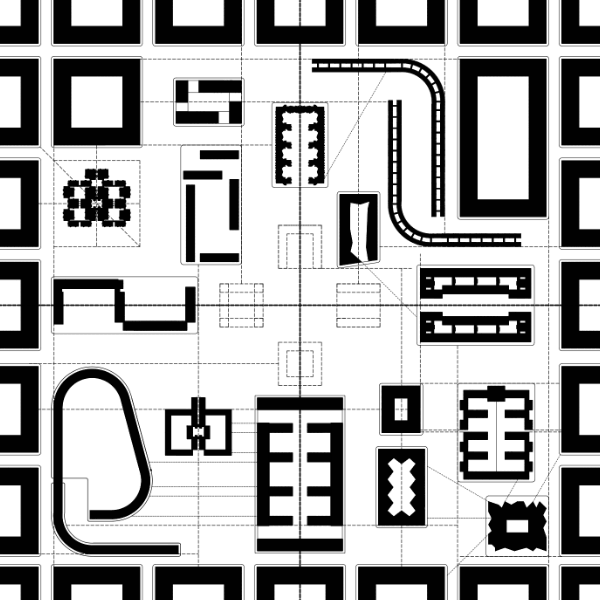
Cover image by students Cruz, Delgado, Nikolskaia, Patel and Ucha
Specialty Leader: Javier García-Germán
Designing for Barcelona’s Mediterranean Climate
The module explores the design opportunities that the fields of thermodynamics and ecology are opening up for architecture, and specifically for the field of collective housing. It focuses on climatic questions and addresses the interplay between climate, metabolism, and architecture, with the objective of finding design strategies that bridge the gap between quantitative and qualitative approaches.
As a result, special attention will be given to questions which in rare occasions are addressed in mainstream sustainability courses. The workshop will immerse in the quotidian implications of sustainability, connecting everyday life to architecture, which introduces to the specialty the ethnological dimension of architecture. This question opens the experiential realm, introducing the human body in its physiological and psychological dimensions to architecture. Under this perspective, the history of architecture —which offers a rich variety of climatic and metabolic references— will be a powerful design tool.


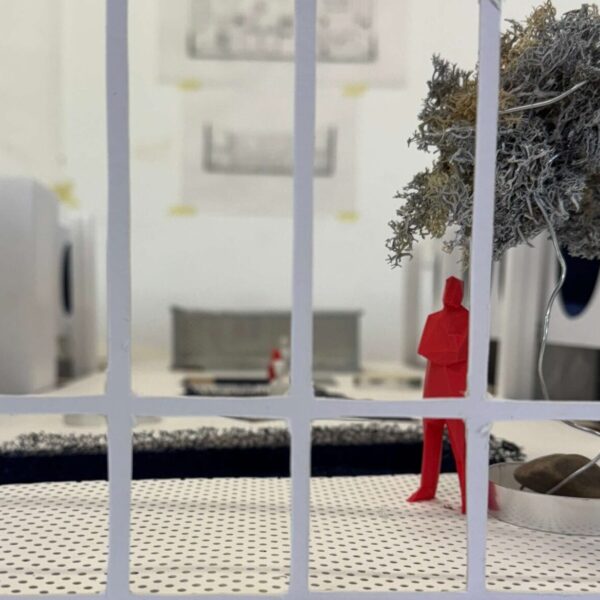
Image by students Cruz, Delgado, Nikolskaia, Patel and Ucha
The idea of integrating seminar and workshop is to introduce a series theoretical concepts and, simultaneously, to learn how to nest them in the design process, thus reinforcing the practical-theoretical approach of this module. This approach, which mediates between the technical and cultural aspects of architecture, focuses on developing informed design strategies and on its implementation on real practice.
Students will start exploring the climate of the Mediterranean coast (around Barcelona) and the human physiological adaptation to this climatic situation. Everyday life situations will give information about how people inhabit in specific climatic conditions, documentary photography showing how architecture deals between climate and people.
Working in the context of Barcelona metropolitan area, students will seek for material opportunities that, while providing the desired climatic and physiological dimension for their projects, they also produce a reinforcing feedback loop. For instance, by using the timber extracted from the sustainable forest management of the metropolitan area that need to be extracted yearly; using abundant available local resources, such as clay; urban mining construction debris or “waste,” surveying material stocks that have been abandoned or underutilized, etc…


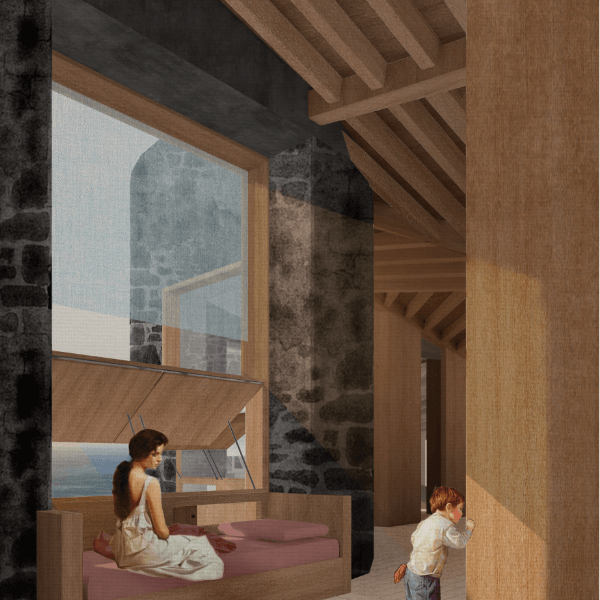
Image by students Cruz, Delgado, Nikolskaia, Patel and Ucha
The final submission is a 20-unit collective housing scheme adapted to the climate of the chosen location. The project will show how collective housing can adapt to climatically-inflected inhabitation patterns.
The proposed pedagogy will inscribe architecture, through its disciplinary apparatus — form, matter and program—, in the global social and ecological networks in which it is embedded, making explicit the dialectics between disciplinary autonomy and contingent engagement.

Material sourcing and logistics by students Cruz, Delgado, Nikolskaia, Patel and Ucha
About Javier García-Germán and TAAs