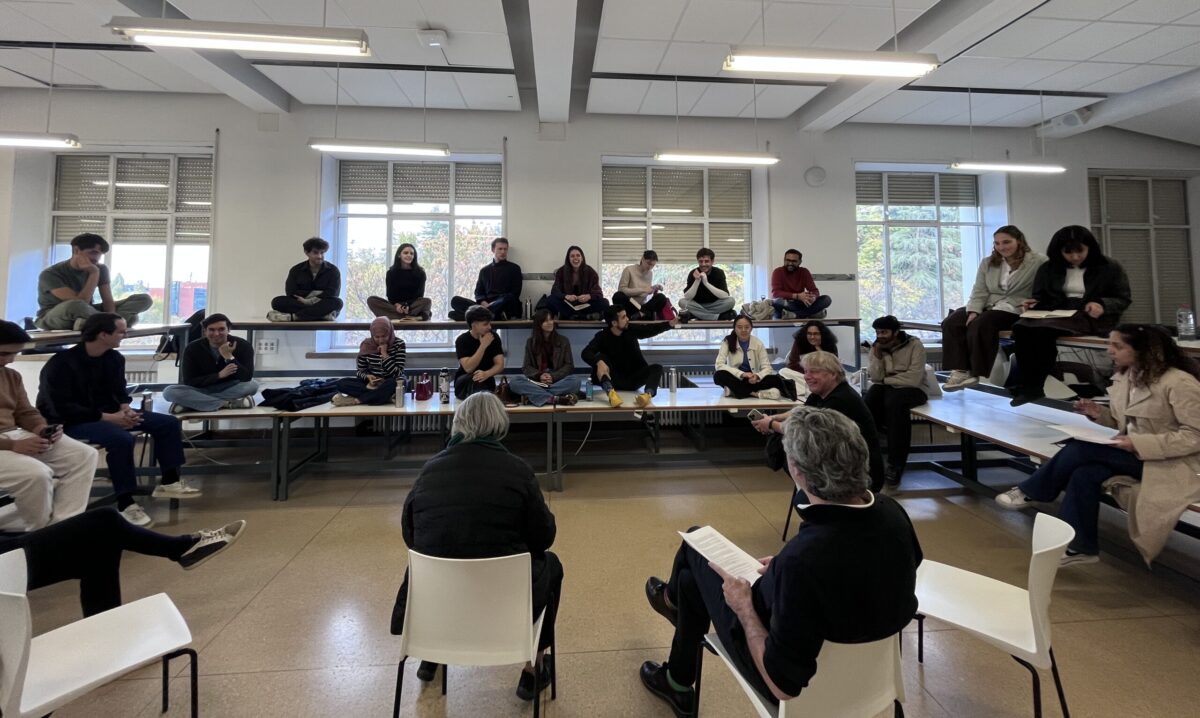
2025 Workshop – Qualities of inhabitation for the 21st Century / Anne Lacaton
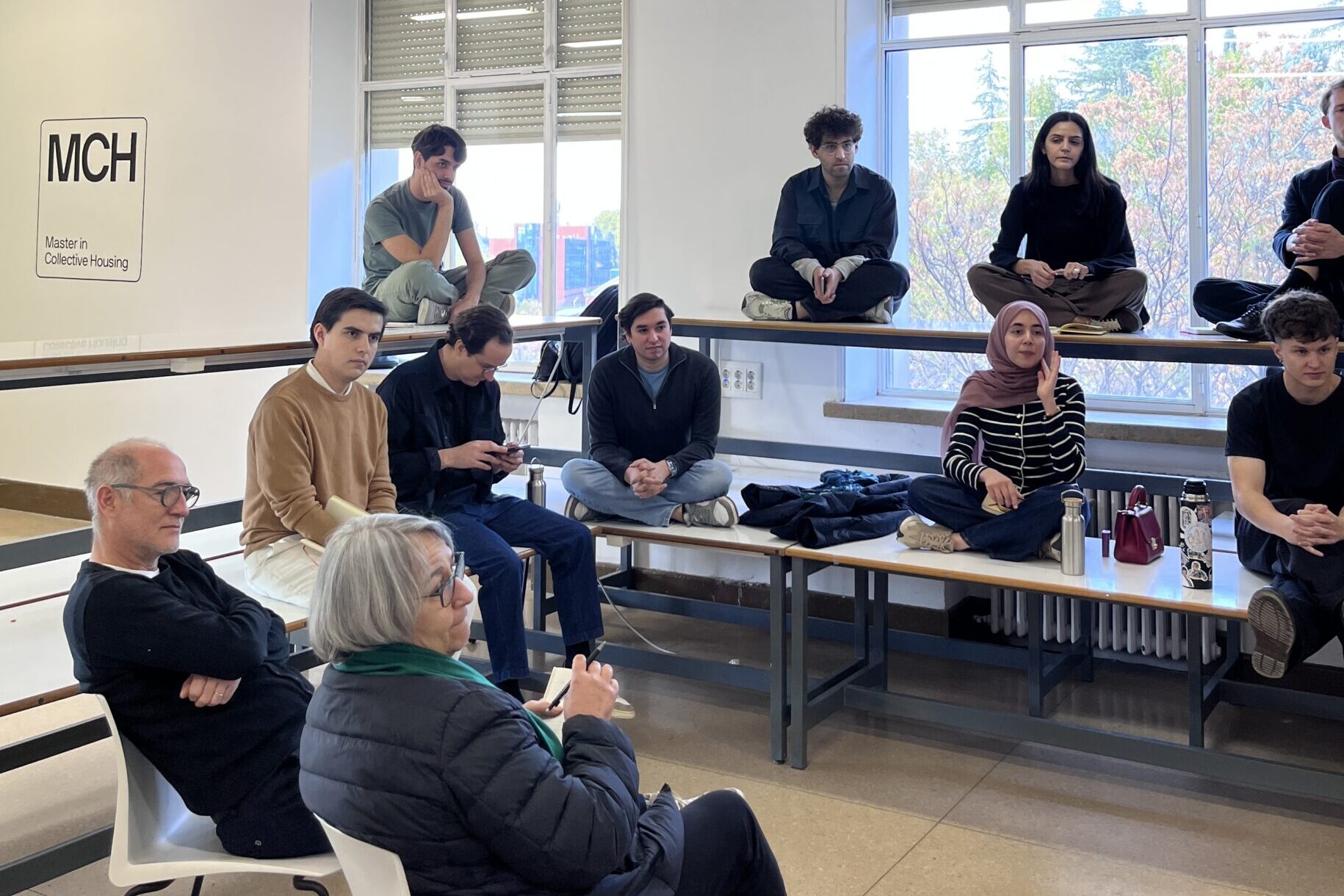
Cover image by MCH class
Workshop Leader: Anne Lacaton
Date: 03rd to 5th of Nov.
2025 Workshop – Qualities of inhabitation for the 21st Century by Anne Lacaton
The MCH25 Lacaton workshop tried to frame and discuss what the conditions for a good quality of living in the city were. Cities were expected to provide exceptional quality of life, offering a wide range of facilities, proximities, and pleasures, as well as a variety of dwelling typologies to fit different needs, expectations, and ways of life: living in a public space, living in the neighborhood, living collectively within close communities, and living individually. Defining a set of principles was considered mandatory before designing architecture, especially dwellings. To do so, it was fundamental to hold a critical position.
The following list of Qualities of Inhabiting represents Anne Lacaton’s and Jean-Philippe Vassal’s design principles and close guidelines always present in their work, brought into their teaching: Generosity, Freespace and extra-space, Capacity for appropriation, Transparency, Inside-outside continuity, Movement, Open structure, Private outdoor space, Space of transition, Pleasure and imagination.
Generosity is an attitude towards all ways of life. It is the main ‘stakeholder’ of luxury, liberty and fairness. The attempt to create a spatial and vital maximum is the core concept of the ‘villa’. Multiplying space, much more generous than the standard, as large as possible and within the same economic resources converts generosity into accessibility and provides the opportunity of ‘escape’ for everyone.
Freespace and extra-space have no defined function, it is free in its usage. As an equivalent to the programmed space and in addition to the traditional space, extra-space decompresses space enabling the user to fully inhabit. Freespace acts as a mediator. Free from standards, it loosens norms and creates new ways of inhabiting.
Capacity for appropriation. Architecture needs to imply the capacity of free interpretation, which is central in order to appropriate space and to invent infinite situations of use. This allows life-long evolution of the space and its users.
Transparency. Maximum well-being is connected to the essential relation with the environment, nature, climate, light, air, and view. Porosity fosters relations, the interaction with the outside, the invitation of sun and wind. Transparency allows for exchange, to relate to the vis-à-vis, to retrieve the horizon, to touch, and to be in touch.
Inside-outside continuity. Continuous floors prolong the inside towards the outside by embodying a sense of emotional and visual escape, freeing the movement and spirit. Movement is free, driven by fluidity and no constraints. From outside towards inside, between spaces, from inside towards outside… It generates a constant ‘escape’.
Open structure offers flexibility to host any function, without privileging a specific program. Industrial construction techniques provide conditions for free and extreme spaciousness, which is capable of transformation.
Private outdoor space such as a balcony, terrace, or winter garden relates to the environment, and offers a sort of garden like in a house, while being on one’s own, in peace.
Space of transition, from private to public space, from intimacy to social involvement, from enclosed to open space – promotes essential relationships, incorporates the possibility of collective sharing and unexpected encounters.
Pleasure and imagination. By superimposing two situations or temporalities of use, or by stretching the social and spatial opportunities, architecture can be poetic and joyful, beyond the functional. It triggers pleasure and imagination to pass into a third space, a sort of miraculous state.
Workshop Description
As it had been in previous MCH workshops, that year’s topic focused on “Qualities of Inhabitation for the 21st Century.” Students were required to attend all six presentations by the WS guests and Anne Lacaton’s Open Lecture at ETSAM. They also prepared questions for the conversations with guests and professors and delivered a final report in the form of a Manifesto or statement related to the topics addressed during the workshop.
About the lecturers
Anne Lacaton – Lacaton & Vassal – https:// www.lacatonvassal.com
Duncan Lewis – Duncan Lewis Scape Architecture office – https:// www.duncan-lewis.com/
Christophe Hutin – Christophe Hutin’s Architecture office – https:// christophehutin.com
Florian Köhl – Florian Köhl Architecture office – https:// fatkoehl.com/en/about-us/florian-koehl/
Rafael Alonso – ATMOSLAB – https:// atmoslab.io
Diego García-Setién – ETSAM – https://dpaetsam.com/mippa/