



2025 Specialty – Urban Design and City Science / José M. Ezquiaga
Cover by students Chauhan, Kordjanbaklou, Jamdar, Peppa
Specialty Leader: José María Ezquiaga
Professor: Gemma Peribañez
Transforming Rural Land In The Metropolitan Mosaic Of Madrid: Challenges Of Urban Expansion

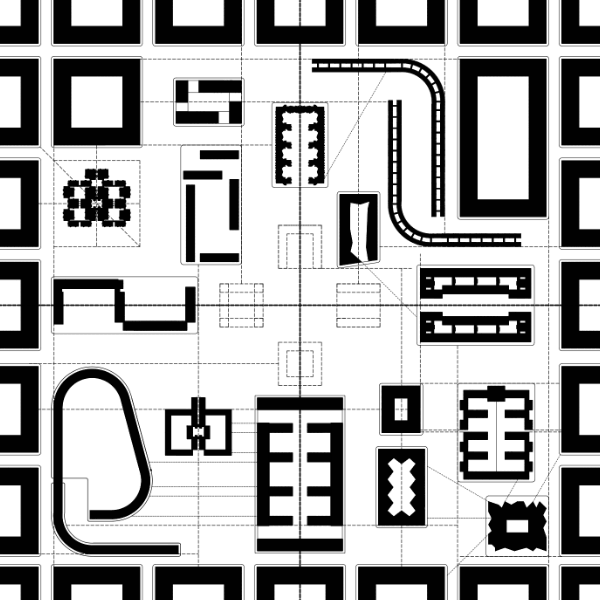
General Plan – Students Chauhan, Kordjanbaklou, Jamdar, Peppa
Urban design and housing development are currently facing a profound crisis. Between tight budgets, political pressures, and the climate emergency, the challenge of creating new neighborhoods that meet the needs of current and future residents is becoming increasingly complex. In response, it is essential to rethink how we design and build community, ensuring that limited resources are used in ways that genuinely support a high quality of life.
Excellence in urban design can no longer be a privilege reserved for major metropolitan centers that attract most investment and high-profile projects. It must extend to all cities and communities, where careful, resource-conscious design can have a truly transformative impact.

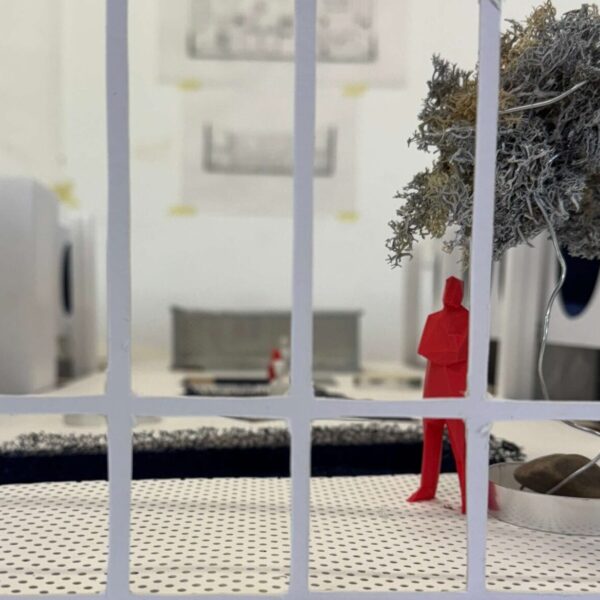
Site analysis – Students Chauhan, Kordjanbaklou, Jamdar, Peppa
This course focused on advancing the concept of a “healthy city,” emphasizing the importance of environments that promote physical and mental well-being through clean air and water, safe and accessible transportation, green spaces, and social and economic opportunities, among other elements. It adopted an interdisciplinary approach, integrating urban planning, architecture, technology, and related fields to analyze and design urban environments as complex, dynamic systems.
The selected case study, Alcorcón Norte, a new district in the municipality of Alcorcón at the southeastern edge of the Madrid metropolitan area, served as the main site for intervention. Covering nearly 200 hectares, it is envisioned as a diverse and dynamic community aspiring to become a global benchmark for sustainability under real-world conditions. The plan includes approximately 10,000 housing units, half of them subsidized, along with cooperatives and housing associations, as well as schools, childcare facilities, cultural and sports amenities, and the creation of more than 10,000 jobs.
Strategically located along the A-5 highway between the M-40 and M-50 ring roads, and adjacent to currently disconnected industrial and residential areas, the district requires an integrated urban design strategy capable of fostering both local and metropolitan-scale connections. Its relationship with the Casa de Campo is strengthened by the continuity of the Meaques stream, which forms a natural ecological corridor. Enhancing the area’s green infrastructure and reinforcing its connectivity to the Casa de Campo were therefore central objectives of the proposal.

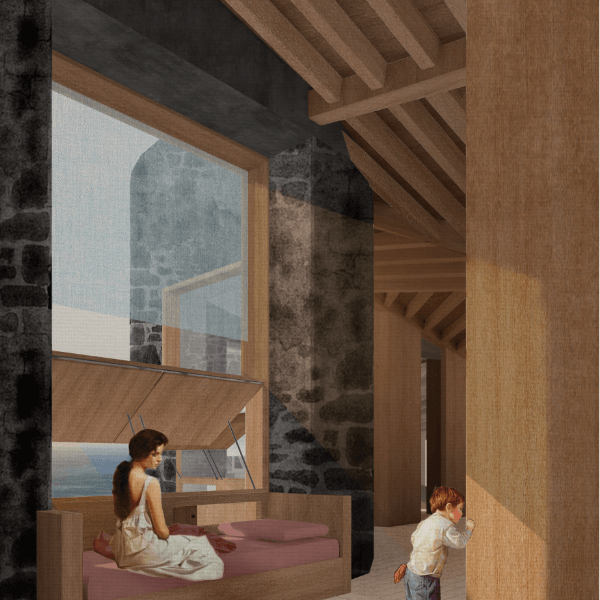
New configuration – Students Chauhan, Kordjanbaklou, Jamdar, Peppa
Operating at the urban scale, the course acted as a catalyst, encouraging participants to explore futures that are socially enriching while also resource-efficient. The focus was on leveraging urban density to limit land-consuming sprawl, while integrating risk reduction, local production of energy, food, and water, and smart mobility systems as key components of the design.
About José María Ezquiaga
About Gemma Peribañez