


2025 Workshop – Domestic Fragments / Elli Mosayebi
Cover image by Ahn, Azzez, Fatourou-Sipsi, Jamadar
Workshop Leader: Elli Mosayebi
Workshop Assistant: Alvaro Martín Fidalgo
Date: 14th to 18th of July
The workshop explores the main challenges of contemporary housing production through three fundamental questions. The first concerns innovation in housing, highlighting how architectural practice has often evolved slowly and conservatively. The dominance of private investment and market speculation reinforce this tendency, as economic security and risk aversion limit experimentation with new urban schemes and spatial configurations. This raises questions about how architects and clients have responded, and continue to respond, to such constraints.
The second question asks, housing for whom? Traditional bourgeois housing models no longer reflect the ongoing social transformations of our time. Shifts in family structures, population aging, migration, and the rise of multiculturalism reveal the inadequacy of standardized models. Moreover, economic prosperity in recent decades has enabled more people to shape their lifestyles according to personal preferences, generating a growing diversity of demands and individual forms of expression. These conditions challenge architectural design to offer flexible and inclusive solutions that embrace plurality rather than impose uniformity.
The third question addresses housing and climate, noting that households still produce excessive CO₂ through energy use for heating and cooling. To counter this, exemplary projects must rethink form, space, and materials, considering the specific energy resources and climatic conditions of each region. Solar radiation, geothermal energy, and waste heat are potential sources, aiming to create sustainable housing models adapted to context—whether in foggy and rainy environments or regions with extreme seasonal temperature variations.

Floor plan G5 – Candano, Hernández, Izquierdo, Nimmala.
The assignment frames the design of an apartment as a critical engagement with contemporary urban housing, using design not just as a practical tool but as a means of understanding the present and generating knowledge. By focusing on small-scale projects, attention is given to themes such as the interior, the form of dwelling, fundamental architectural elements, and the role of climate.
At the center of the studio are the guiding questions: what does innovation in housing mean, and is it even possible? How do activities, functions, and space interrelate, and can we imagine forms of dwelling defined less by function and more by abstract spatial qualities? These questions push design beyond conventional problem-solving into the realm of speculation and experimentation.
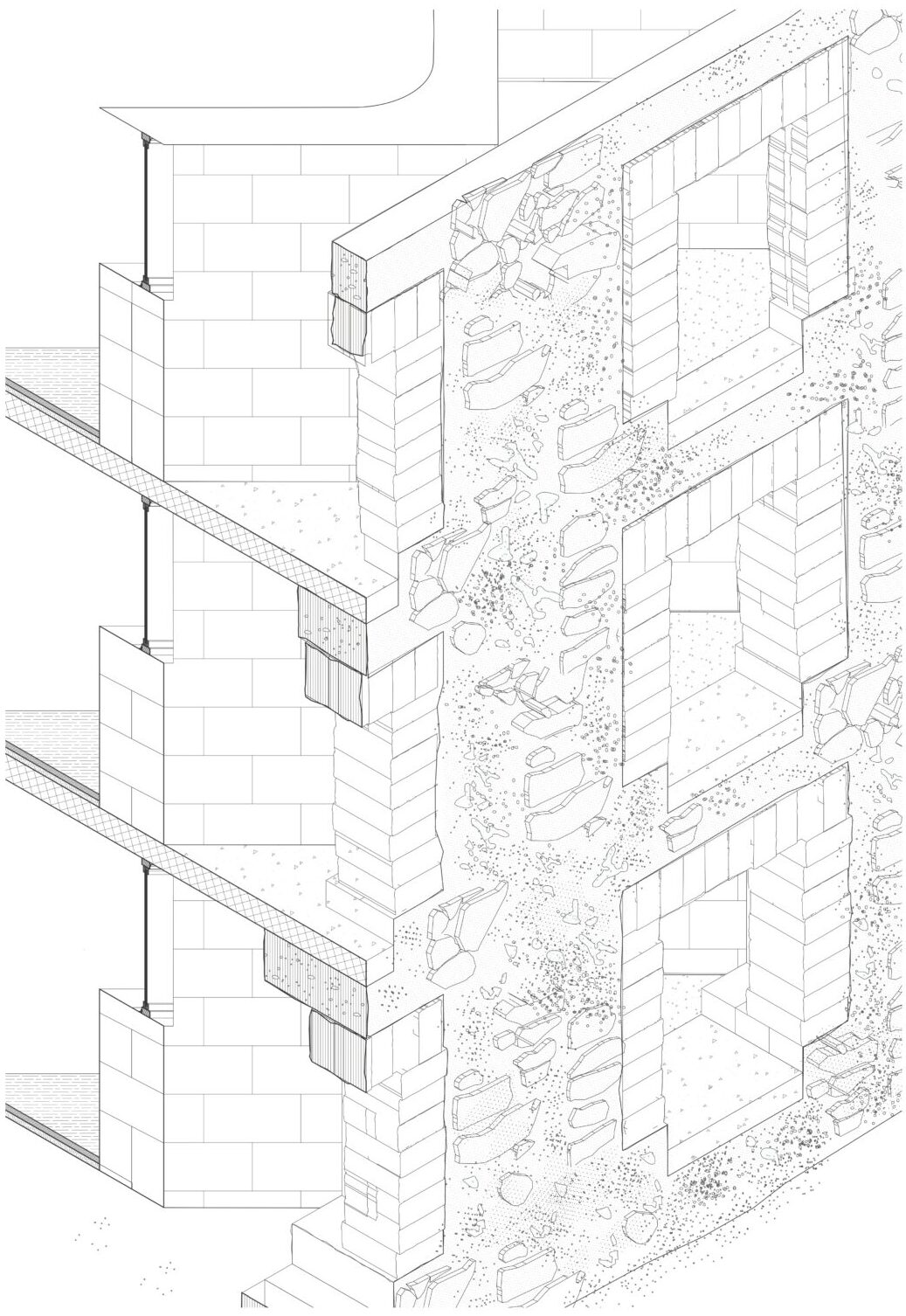
Detail G4 – Cantú, Kaloudis, Molina, Peppa.
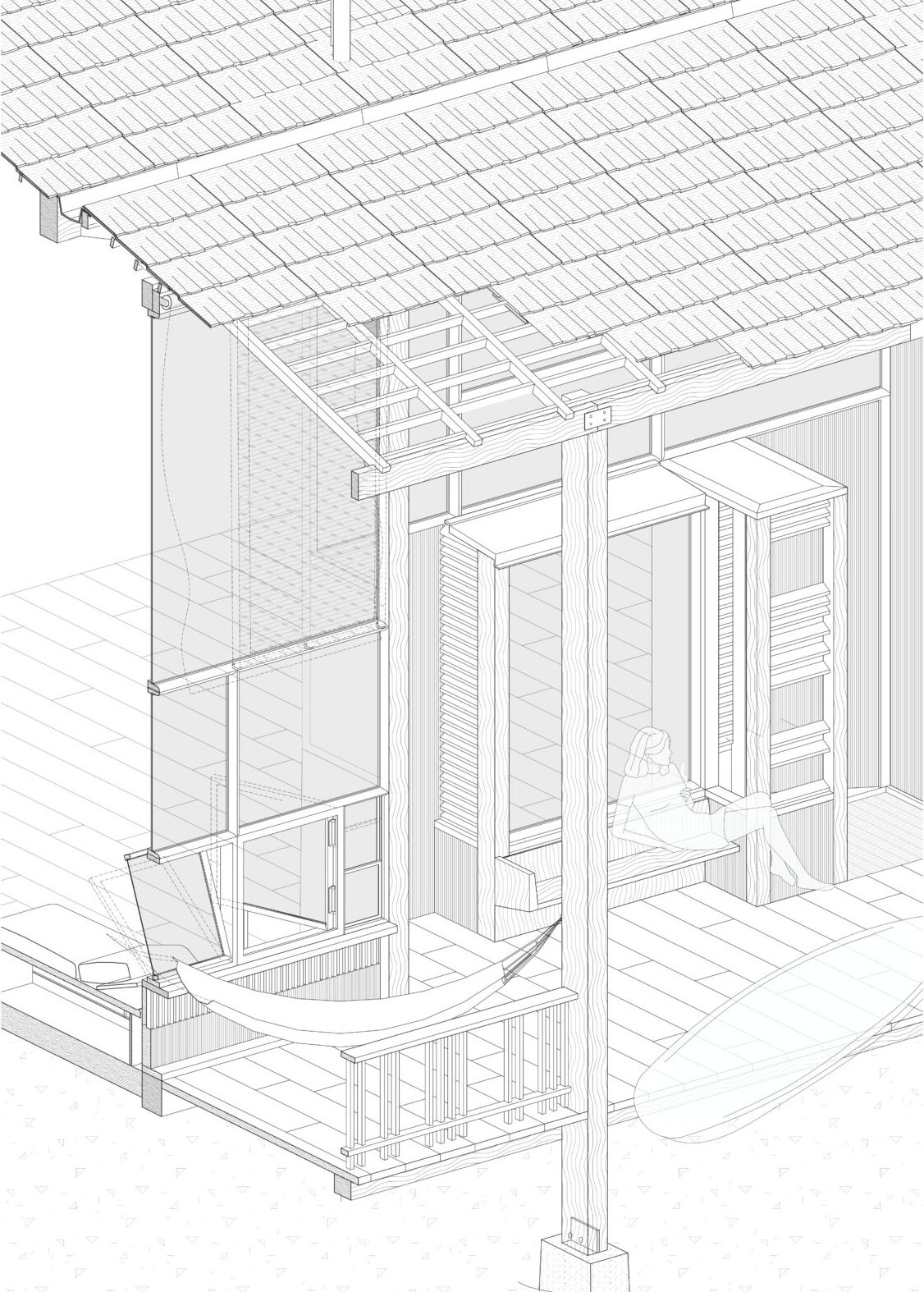
Detail G5 – Candano, Hernández, Izquierdo, Nimmala.
Equally important are questions of who housing is for and how contemporary ways of living challenge neutral, functional programs. In a context shaped by diverse lifestyles and fragmented concepts of life, design must reconsider inclusivity and adaptability. The assignment also considers what it means to build outside the city, in the countryside or other non-urban contexts, and how contemporary cultures of dwelling manifest in such settings, expanding the definition of urban housing beyond the city itself.
Finally, the workshop proposes using the window as the primary origin of the project, guiding the design of the dwelling’s floor plan, section, and elevation. It encourages exploring how architectural elements or furniture can shape space, for example, designing around a staircase, chimney, columns, or a centrally placed bed. The focus is on the relationship between this low-tech climatic device and the spatial potential, fostering radical and experimental architectural proposals.
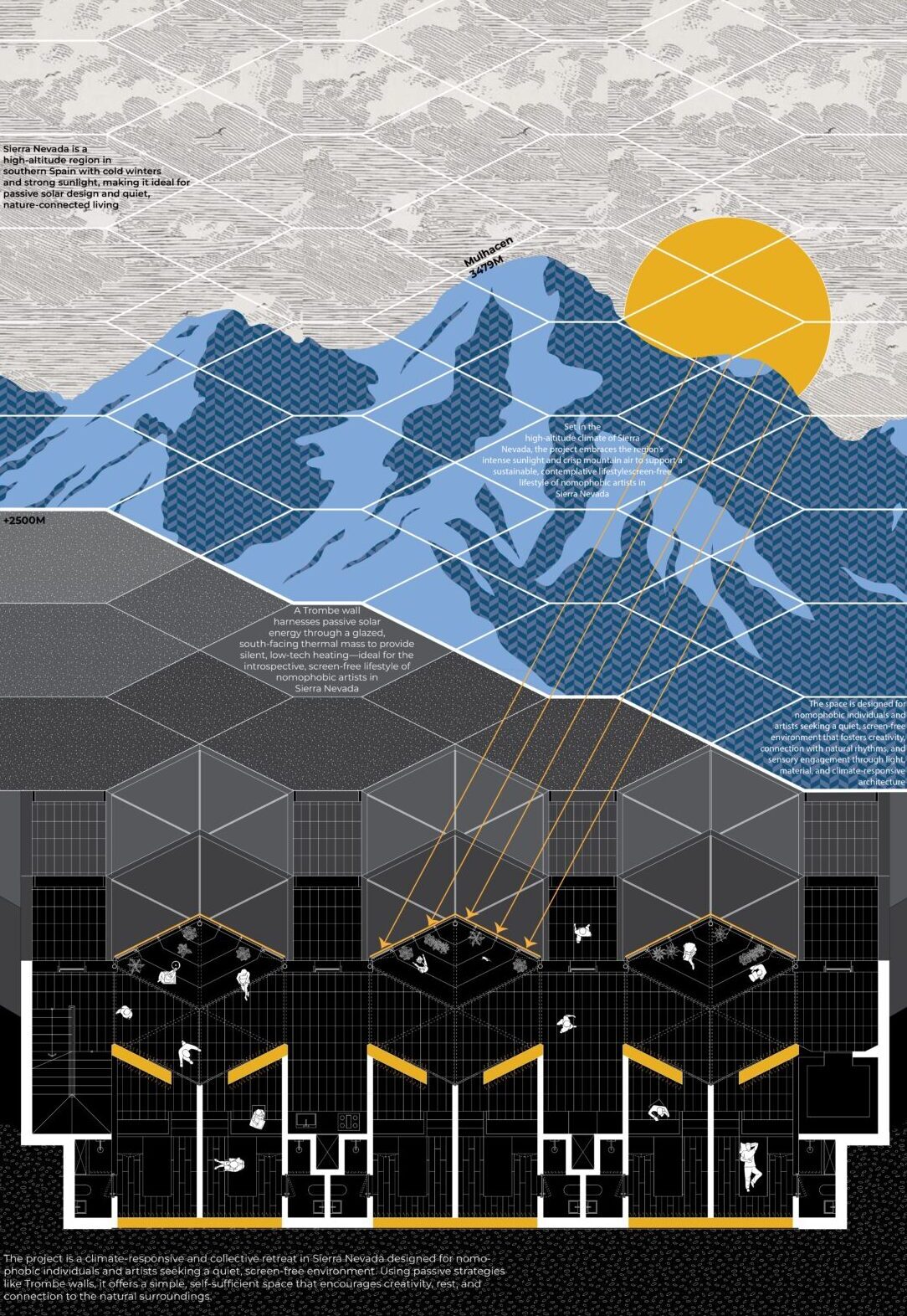
Miniature G1 – Ahn, Azzez, Fatourou-Sipsi, Jamadar
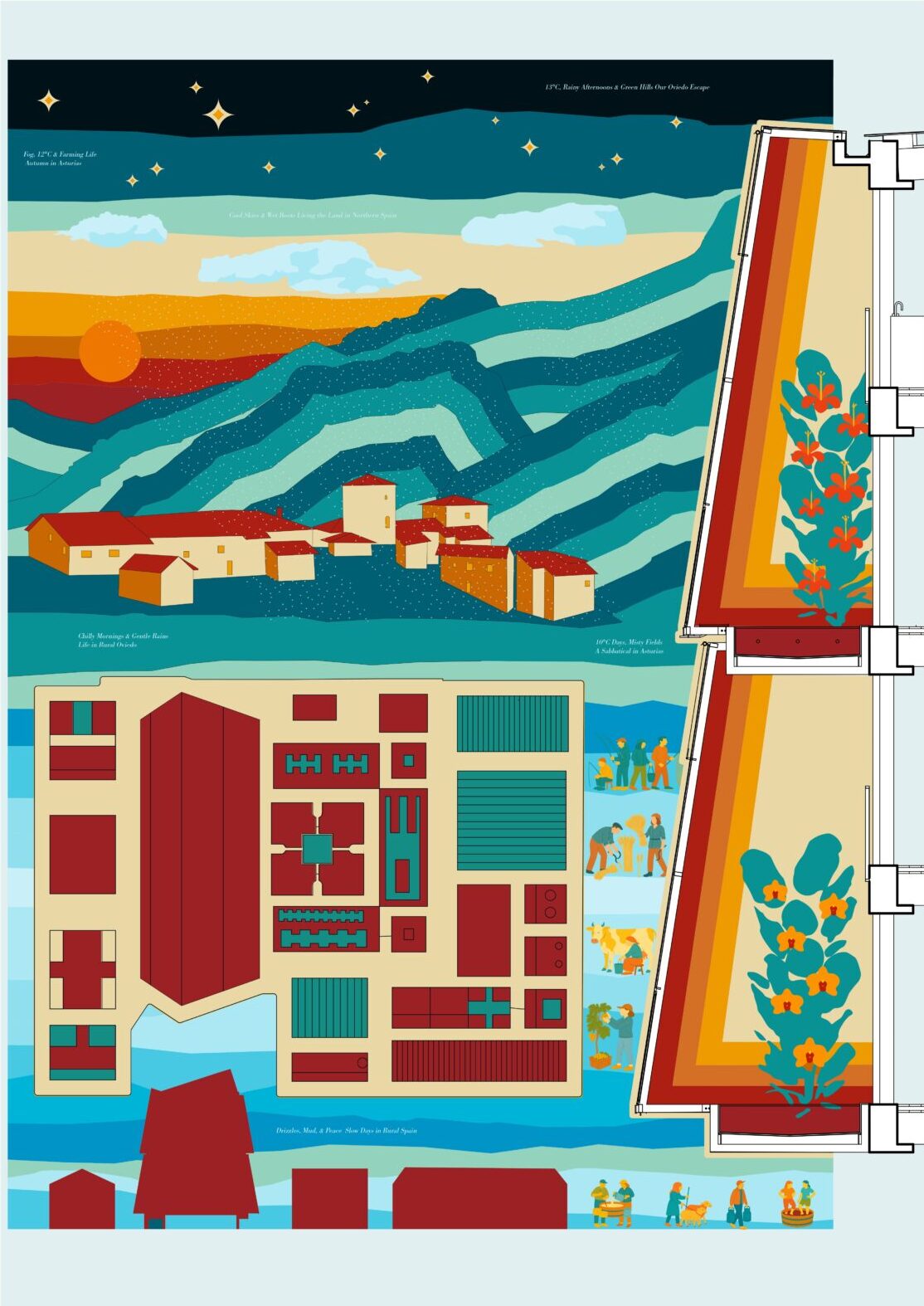
Miniature G2 – Begino, Chauhan, González, Gutierrez
About Elli Mosayebi
About Alvaro Martín Fidalgo
Author: Camilo Meneses. MCH Manager
