


2025 Workshop – Inhabited Boundaries / Alison Brooks
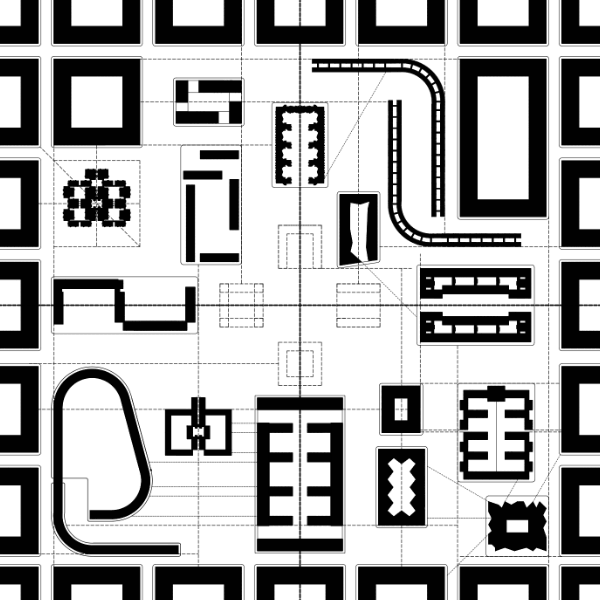
Cover image by students Carassale, Molina, Nimmala
Workshop Leader: Alison Brooks
Assistant: Carlos Chauca
Date: 05th to 09th of May
Urban housing impacts individual and collective consciousness at multiple scales. Each dwelling offers an intimate stage for individual experience: of home, of shelter, of daily domestic rituals (sleeping, cooking and eating, bathing, forms of working, storing and displaying memorabilia, etc.) and as a place for social exchange. Volume, light, material and acoustic properties of the dwelling are experienced sensorially; spatial relationships inform the quality and quantity of social interactions. Moments in everyday life engrain themselves in human conscious or sub-conscious to forge our sense of place and a sense of self.
More than any other building type, urban housing also impacts our collective understanding of place. It is the frame for the streets, squares and passages in which civic life takes place, a three-dimensional boundary between the public realm and the space of private dwelling. This boundary typically manifested itself as a perforated wall. In the pre-modern city, residential building facades were also structure, responding to gravity with thickness, density. Windows punctuated these robust walls in regular patterns, their frequency and proportion responded to the span of a stone lintel or a masonry arch. These perforate walls, a more or less continuous patterned surface, served the collective project of the city with a coherent ‘street architecture’, a shared syntax including building typology, scale and material that had primacy over individual expression.
Today, contemporary construction technologies permit housing architecture to express new social values, lifestyles and identities, and to respond to environmental conditions, economies and politics.
How does nature of the urban ‘street-wall’, the boundary, the façade and its structure express these new conditions?
Can the wall take on new performative social and environmental characteristics, to support a more resilient, sustainable community and neighbourhood?
Can a wall be re-imagined as a place of invitation, of liminal being, of environmental absorption or social expression?
This studio sees the boundaries of housing architecture as both walls and spaces that mediate between the public realm and domestic life. In our workshop we will explore the nature and potential of the ‘inhabited boundary’ in Madrid’s historic Barrio de La Latina.
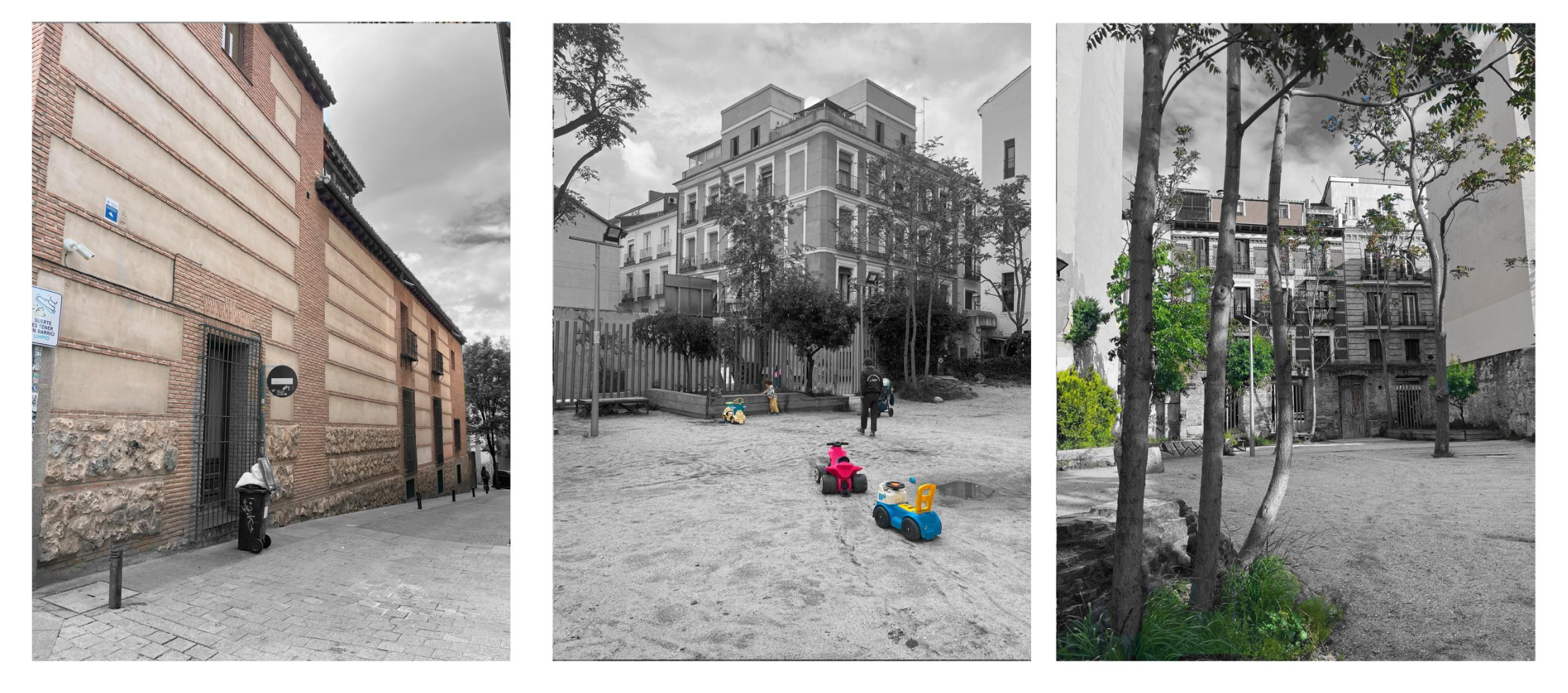
Image of Barrio La Latina by students Chauhan, Kordjanbaklou, Ahn
Our site, ‘Plaza Fiesta’, is currently a public open space that bridges between two streets at the confluence of C. del Almendro and C. de la Cava Baja. Below the surface lie the archaeological remains of 9th Century walls, the Islamic fortress around which the city of Madrid grew. This site is therefore a place of memory, a former boundary, now an informal public gathering place. Our mission is therefore to re-inhabit the site in response to this historic condition, in response to demands for affordable, sustainable housing for young people in the inner city. We explore a new housing typology that re-imagine the boundaries of housing as places of environmental mediation, of healthful dwelling and renewed social exchange.

Floor plan of the site by students González, Izquierdo, Jamdar
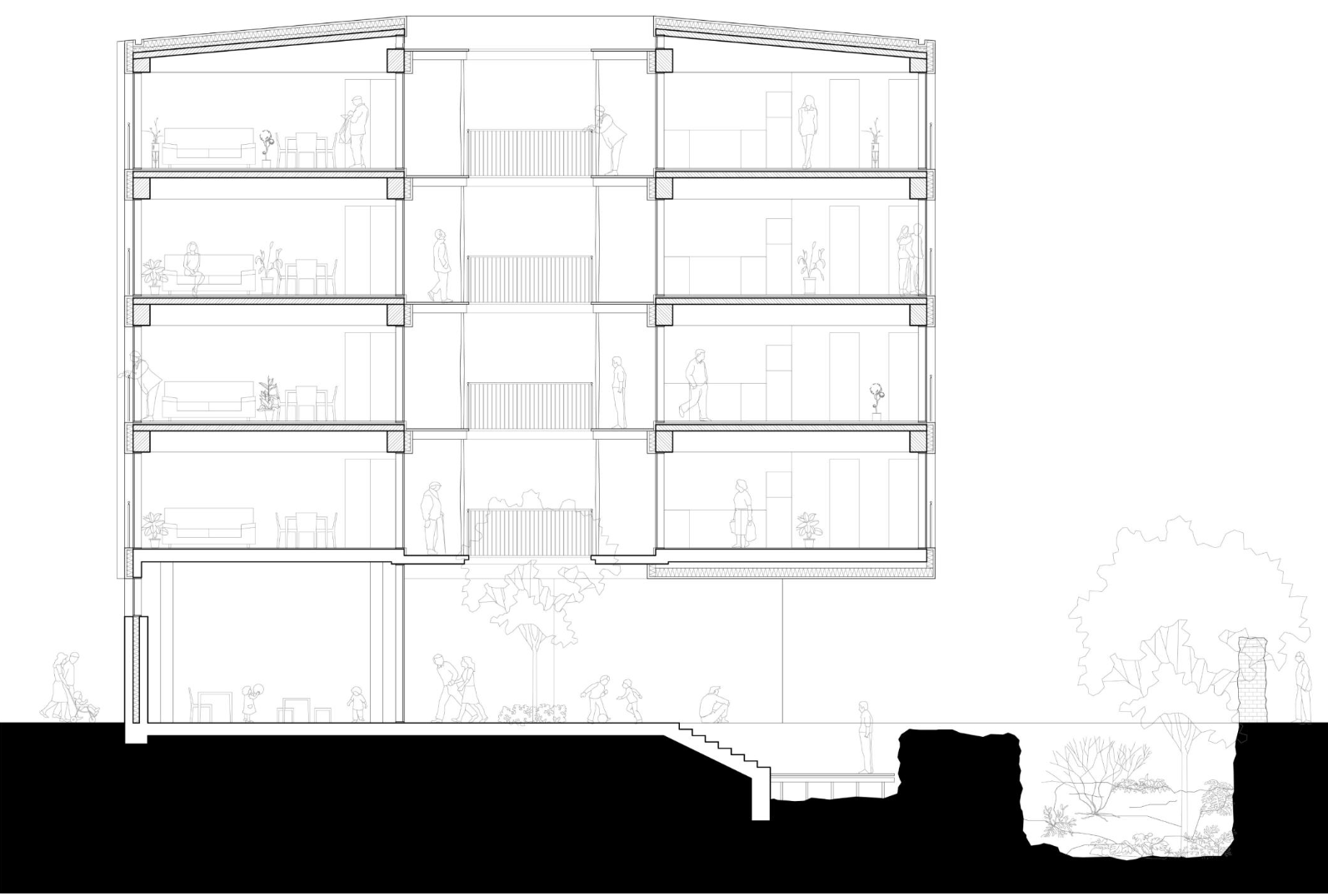
For this assignment, each group must consider creating a proposal that is both innovative and harmonious with the context, where the wall is regarded as a fundamental part of its design, taking into account the spatial limitations as well as the potential of a site that, while intended to house residences, will also have a vocation of openness to the community.

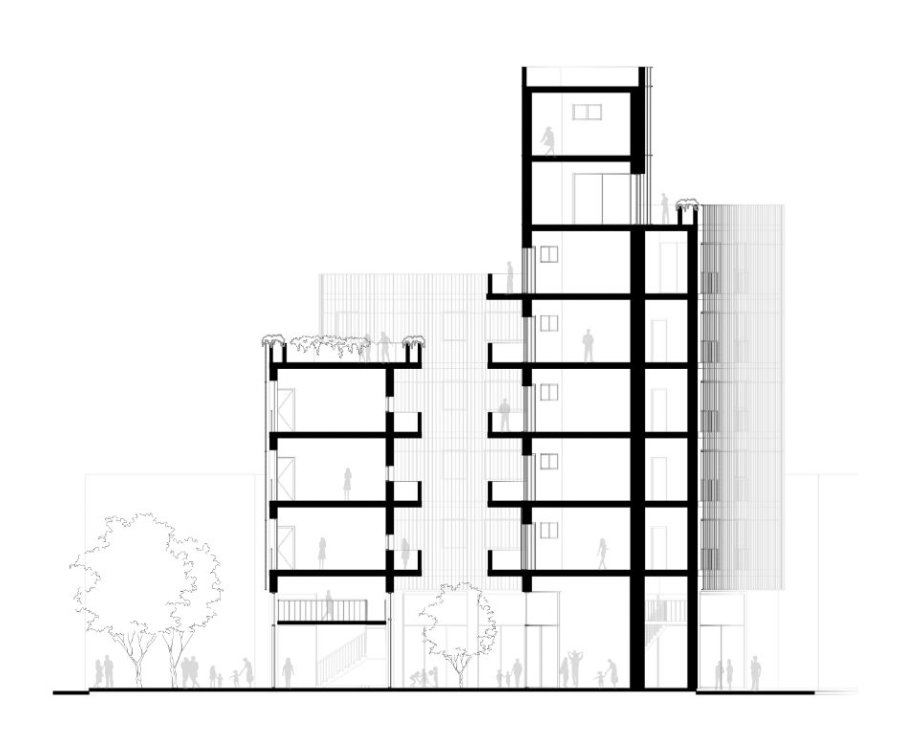
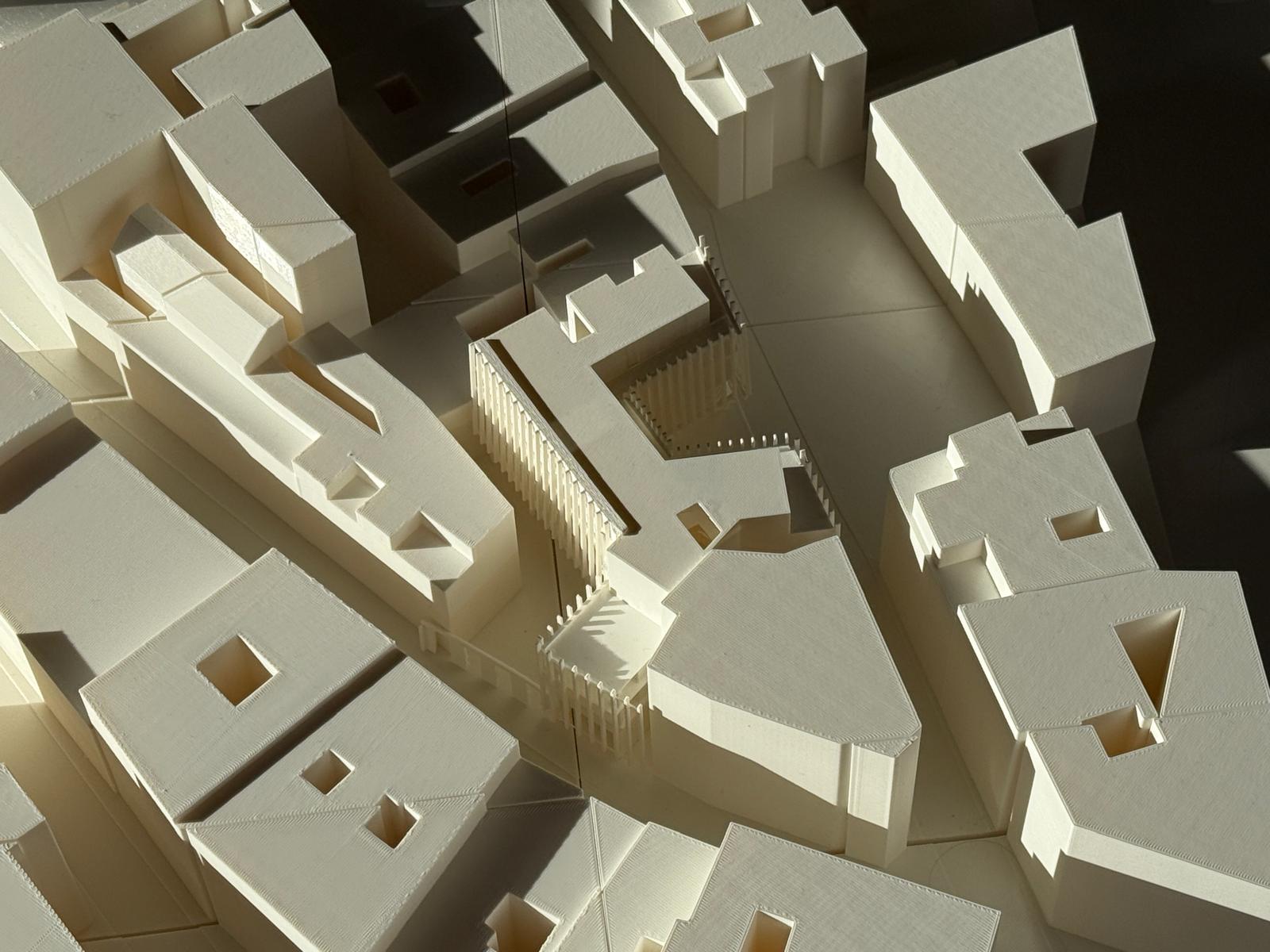
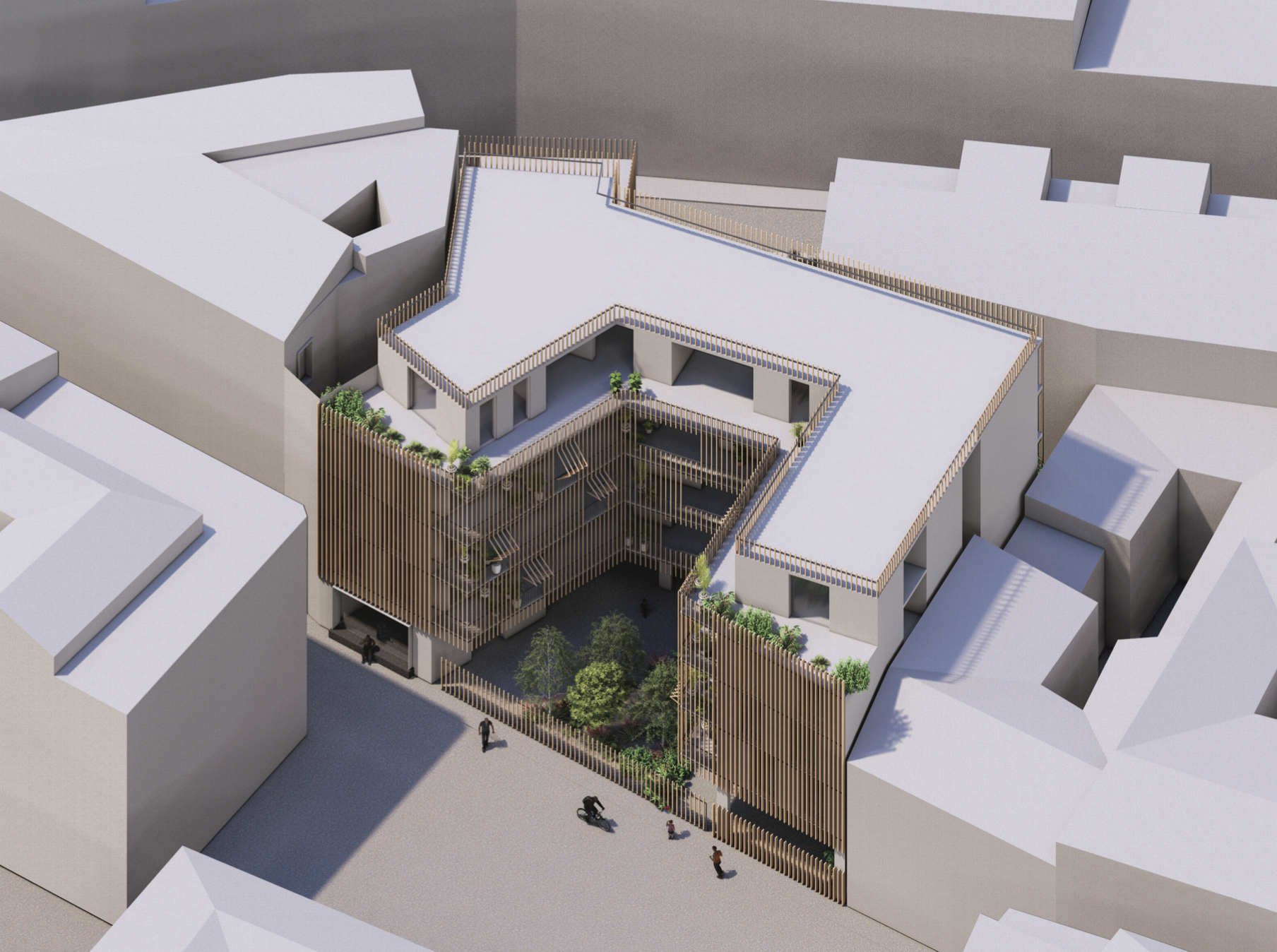 .
.  .
. 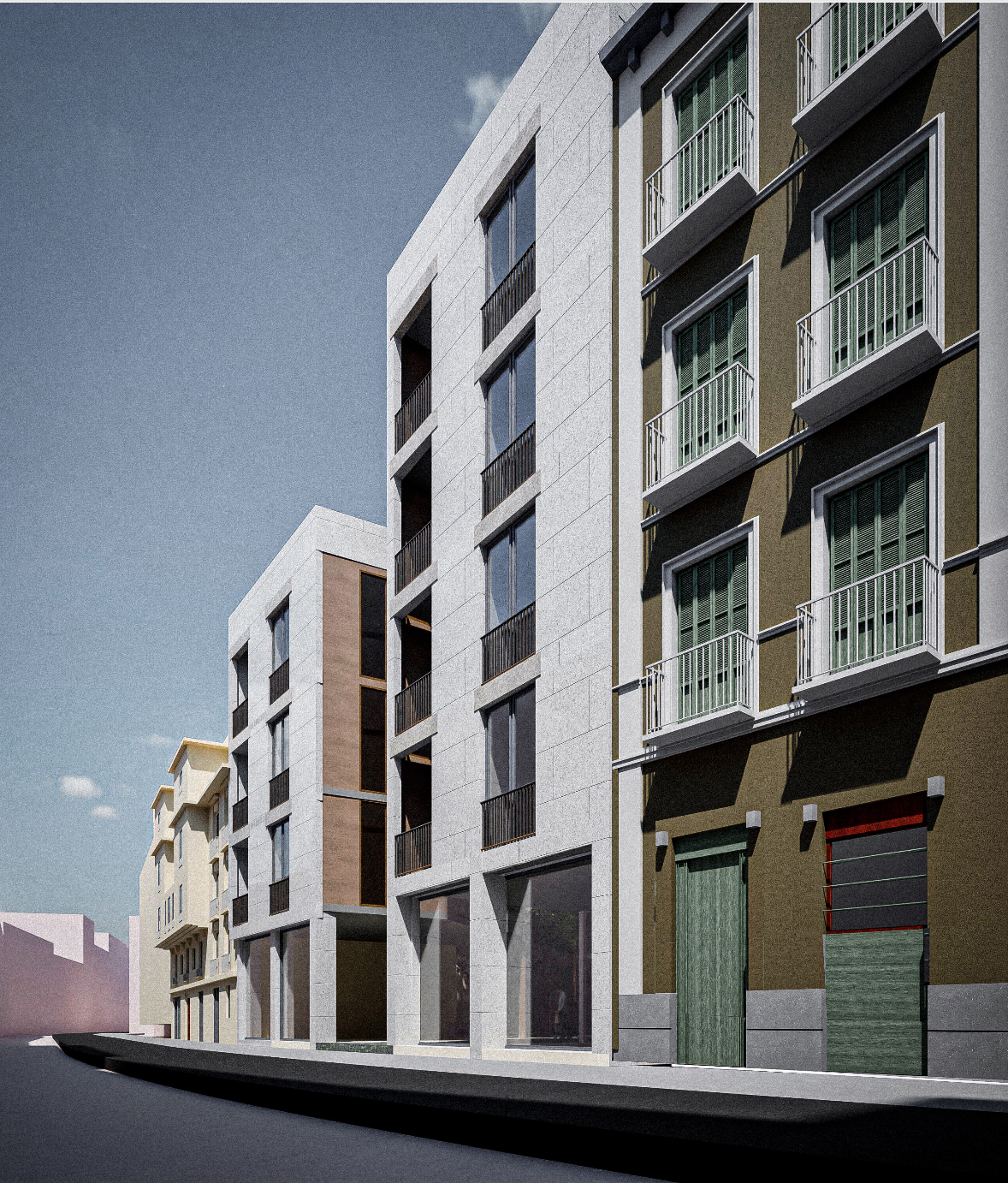
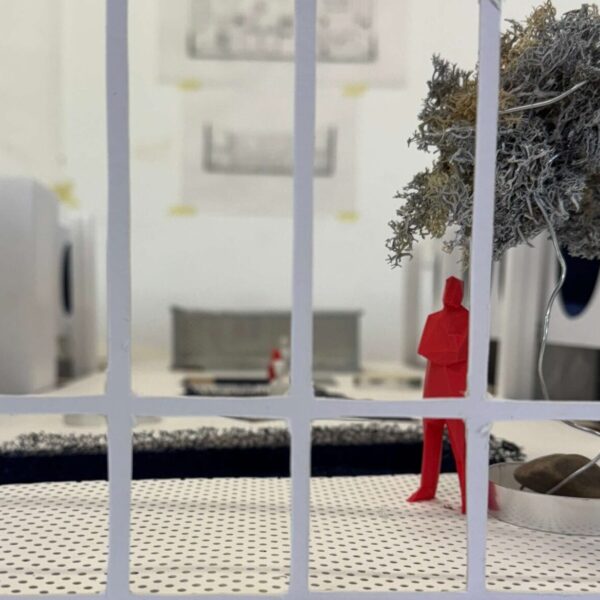
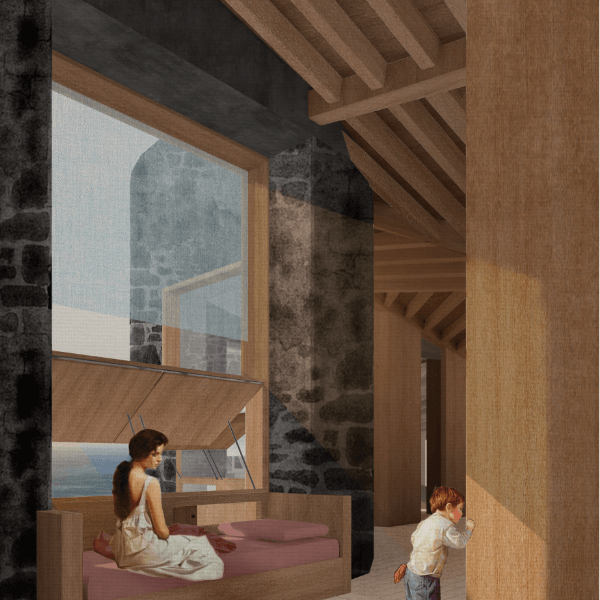
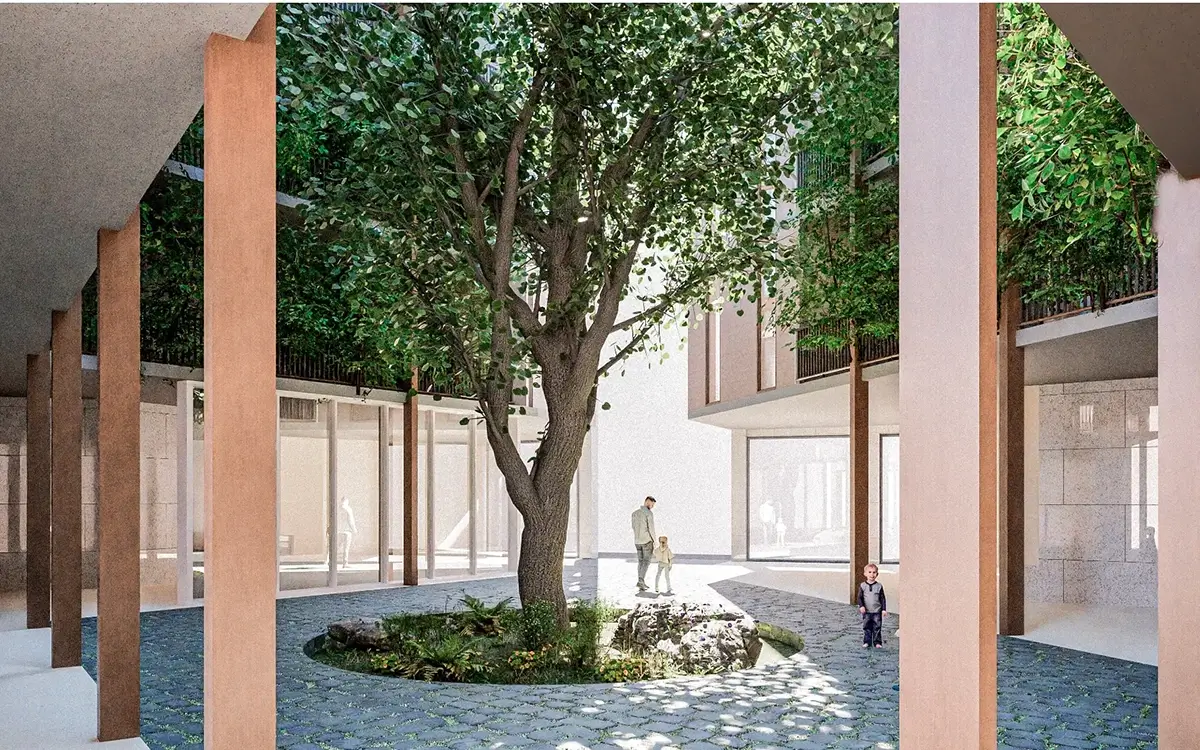
Final submissions by MCH students
About Alison Brooks
About Carlos Chauca