


What is Sustainable Housing Design?
A Complete Guide to Principles, Strategies and Contemporary Practice
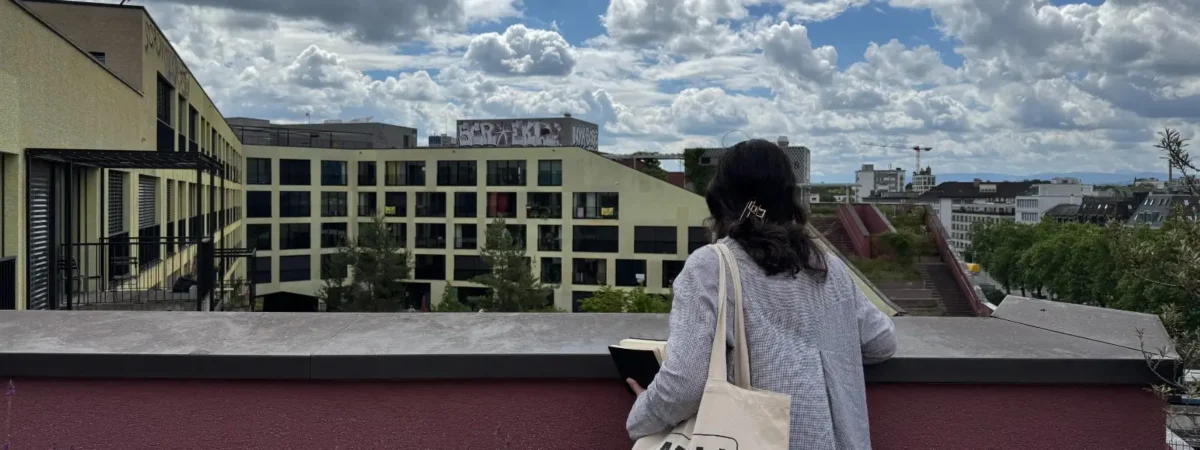
Sustainable housing design is an approach to residential architecture that minimises environmental impact across the full life cycle of a building — from material extraction and construction through occupation, refurbishment and end-of-life. It combines passive design strategies, efficient energy systems, low-carbon materials and a careful relationship with site and climate to produce homes that are healthier, cheaper to operate and significantly less carbon-intensive than conventional construction.
The field has moved well beyond the idea of adding solar panels to a standard house. Today, sustainable housing design integrates passive principles, embodied carbon accounting, circular material strategies and the social dimension of long-term affordability and resilience. It is also one of the most relevant fields of contemporary architectural practice, shaped by the climate crisis, tightening building regulations and the urgent need to decarbonise the built environment.
This guide explains what sustainable housing design is, how it differs from related terms such as green building and net-zero, where it comes from, the core principles that define it and how the MCH Master program approaches sustainability within the field of collective housing.
1. Definition:
What is Sustainable Housing Design?
Sustainable housing design refers to the planning, construction and operation of residential buildings in a way that meets the needs of current occupants without compromising the ability of future generations to meet their own — to borrow the definition of sustainability established by the Brundtland Commission in 1987 and applied to architecture ever since.
In practical terms, sustainable housing design works on three intersecting dimensions:
Reducing operational and embodied carbon, minimising water and energy use, protecting biodiversity, and choosing materials with low environmental impact.
Keeping homes affordable over time, lowering running costs through efficiency, and prioritising durability and adaptability.
Delivering healthy indoor environments, supporting community life, and ensuring access to good housing across income levels.
Unlike conventional residential design — where sustainability is often added as an optional layer — sustainable housing design integrates these dimensions from the earliest sketches. Orientation, massing, structural system, materials and services are all decisions with environmental consequences, and treating them as a single coherent system is what separates a sustainable project from a conventional one with a few green features.
This integrated approach is central to the Master in Collective Housing, where architects engage with sustainability as a structural condition of contemporary practice, not as a specialism.
2. Sustainable Housing / Green Building / Net-Zero
The terms sustainable housing design, green building and net-zero housing are often used interchangeably, but they describe different things. Understanding the distinction matters when reading specifications, certifications or policy documents.
| Sustainable Housing Design | Green Building | Net-Zero Housing | |
|---|---|---|---|
| Scope | Whole life cycle of the building | Mainly construction and operations | Operational energy balance |
| Focus | Environmental + economic + social dimensions | Reduced environmental impact in construction and use | Annual energy produced ≥ annual energy consumed |
| Time horizon | Decades — including end-of-life and reuse | Construction phase + operation | Year-on-year balance |
| Typical evidence | Life-cycle assessment (LCA), embodied carbon, social outcomes | Certifications: LEED, BREEAM, Green Star | On-site renewables + monitored consumption |
| Includes affordability? | Yes (explicit social pillar) | Not necessarily | Not necessarily |
In short: every net-zero home is green, and every green home contributes to sustainability, but only sustainable housing design treats environmental, economic and social outcomes as one continuous problem.
A house can be net-zero in operation and still have a large embodied-carbon footprint if it was built with carbon-intensive materials. It can be certified LEED Platinum and still be unaffordable to maintain over its lifetime. Sustainable housing design asks the harder question: what is the overall environmental, economic and social performance of this home over the next fifty to one hundred years?
Read more about net-zero housing.
3. A Brief History of Sustainable Housing Design
The idea of designing housing in response to climate, materials and resources is ancient. Vernacular architectures — from courtyard houses in North Africa to timber farmhouses in the Alps — have always optimised local materials, orientation and thermal mass long before “sustainability” became a discipline.
The modern history of sustainable housing design begins in the 20th century with three converging movements:
1970s — energy crises and the experimental decade. The oil shocks of 1973 and 1979 triggered the first systematic interest in low-energy housing. Projects like the Earthship prototypes in New Mexico (Mike Reynolds, from 1971) explored radical material reuse and self-sufficiency, while a generation of architects began studying passive solar design seriously.
1980s–1990s — the certification era. Environmental standards for housing began to formalise. The Building Research Establishment Environmental Assessment Method (BREEAM) launched in the UK in 1990, the LEED system followed in the United States in 2000, and the Passivhaus Standard was codified by Wolfgang Feist in Darmstadt in 1991 around a single, measurable goal: an annual space-heating demand under 15 kWh/m².
2000s–present — climate emergency and embodied carbon. Two shifts redefined the field. First, the operational-only definition of sustainability gave way to a whole-life approach, with embodied carbon — the emissions associated with materials and construction — moving to the centre of the conversation. Second, sustainability was reframed as inseparable from affordability and access: a Passivhaus is only sustainable if people can actually afford to live in it.
Projects such as BedZED (Beddington Zero Energy Development, UK, 2002), Vauban district (Freiburg, Germany), and contemporary cooperative housing such as Kalkbreite (Zurich) have moved sustainable housing design from individual exemplars to neighbourhood-scale practice.
In parallel, a generation of Swiss practices has redefined what sustainability means at the level of the individual building: studios such as Gigon/Guyer, whose work foregrounds durable materiality and long-life construction, and Boltshauser Architekten, internationally recognised for advancing rammed earth and natural-material construction in contemporary projects. Both practices are led by professors at ETH Zurich — one of the two institutions behind the postgraduate program in collective housing at MCH, where this approach is central to the curriculum.
4. Core Principles and Strategies
Sustainable housing design is not a single technique but an integrated set of principles. The following six are the structural pillars of contemporary practice.
Orient buildings to optimise solar gain in winter and minimise it in summer. Use thermal mass, cross-ventilation, shading and a well-insulated envelope to reduce mechanical heating and cooling demand to the minimum possible before any system is installed. The most rigorous application of this principle is the Passivhaus Standard.
Adapting the building to its specific climate — humid, arid, temperate, alpine — using local knowledge and contemporary tools. This includes orientation, building form, openings, materials and landscape integration.
Once passive demand is minimised, the remaining energy needs should be met as efficiently as possible — heat pumps, mechanical ventilation with heat recovery (MVHR), high-efficiency appliances — and supplied where possible by on-site renewables (photovoltaic, solar thermal, geothermal).
Embodied carbon now accounts for roughly half of the lifetime emissions of a new high-performance home. Choosing materials with low embodied carbon — timber, hemp, earth, recycled steel, and construction systems that minimise waste and allow disassembly is one of the highest-leverage decisions in sustainable design. Read more on prefabricated timber construction systems.
Whole-life carbon assessment is moving from voluntary to mandatory in jurisdictions across Europe. Sustainable housing design now requires architects to quantify and minimise embodied emissions across raw materials, construction, use, maintenance and end-of-life.
Rainwater harvesting, greywater reuse, permeable surfaces, biodiversity-positive landscape design and material circularity (design for disassembly, reuse, recycling) close the loop between the building and its site.
Few of these principles work in isolation. The discipline of sustainable housing design is the discipline of integrating them and that integration is what is taught and practised at MCH.
5. Sustainable Housing at MCH
Research and Projects
Sustainability is woven through the academic structure of the MCH Master program. Specialty studios and seminars regularly address climate, materials and low-resource housing as central design problems, not as optional add-ons.
Recent academic editions have produced studios explicitly focused on climate-responsive design:
- The Climate Specialty Studio explored housing strategies for changing climatic conditions.
- The Low-Resources and Emergency Housing Studio addressed sustainability under conditions of material and economic scarcity — arguably the hardest test of the discipline.
This studio work is grounded in a substantial body of research published by the program. Two MCH publications are particularly relevant to anyone interested in the intersection of housing and sustainability:
- Vivienda y Clima — a research volume on the relationship between collective housing and climate-responsive design.
- Thermodynamic Interactions — an exploration of the thermal logic that underpins low-energy architecture.
Together, the studios and publications make MCH one of the few postgraduate program in which Sustainable and Urban Housing Design are studied not as a technical specialism but as a condition of contemporary Collective Housing.
6. Why Study Sustainable Housing Design?
The case for studying sustainable housing design rests on three converging forces. The first is regulatory: across Europe, the recast Energy Performance of Buildings Directive is moving the entire residential stock toward zero-emission standards by 2050, with intermediate milestones already in force. New regulations on embodied carbon are following in jurisdictions from France to the Netherlands. Architects who do not understand the technical and design implications of these frameworks will simply be unable to practise at the level expected of the profession.
The second is market: clients — public, private and cooperative — increasingly require demonstrable environmental performance. Few subjects in architecture combine such depth of technical knowledge, design ambition and social relevance.
The third is intellectual: sustainable housing design is one of the most demanding problems in contemporary architecture, requiring the integration of climate science, materials, structural design, building services, life-cycle thinking and the social organisation of collective life. It is also closely interwoven with the broader field of collective housing — sustainable strategies scale better, perform better and are more affordable when applied to shared rather than individual structures.
Architects who want to engage with this field at postgraduate level can apply to the MCH Master for the next edition, or check the admission requirements before applying.
Sustainable Housing FAQs
What is sustainable housing design?
Sustainable housing design is the practice of designing residential buildings to minimise environmental impact across their full life cycle, while delivering healthy interior environments, long-term affordability and social value. It integrates passive design, efficient systems, low-carbon materials and life-cycle thinking from the earliest design stages.
What is the difference between sustainable housing and green building?
Green building usually refers to construction and operational practices that reduce environmental impact, often documented through certifications such as LEED or BREEAM. Sustainable housing design is broader: it covers the full life cycle of the building, includes embodied carbon and end-of-life, and explicitly integrates social and economic dimensions such as long-term affordability.
Is a Passivhaus the same as sustainable housing?
No. Passivhaus is a rigorous certification standard focused on operational energy — particularly heating demand. A Passivhaus building is highly energy-efficient in use, but it is not automatically sustainable: a Passivhaus with high embodied carbon, in a poor location, or unaffordable to maintain would fail the broader test of sustainability. Passivhaus is one of the most effective tools within sustainable housing design, but it is not equivalent to it.
Can sustainable housing design be affordable?
Yes — and increasingly it has to be. Affordability over time is a defining criterion of sustainable design: lower energy bills, lower maintenance, durable materials and adaptable layouts reduce lifetime cost. Cooperative and collective models are particularly effective at combining sustainability and affordability, which is why they receive significant attention within the MCH programme.
How does the MCH Master address sustainability?
Sustainability runs through the entire MCH curriculum. Specialty studios on climate, low-resource housing and energy are part of the academic structure; research publications such as Vivienda y Clima and Thermodynamic Interactions provide the theoretical grounding; and the focus on collective housing ensures that sustainable strategies are studied at the scale where they have the greatest impact — shared buildings and neighbourhoods.