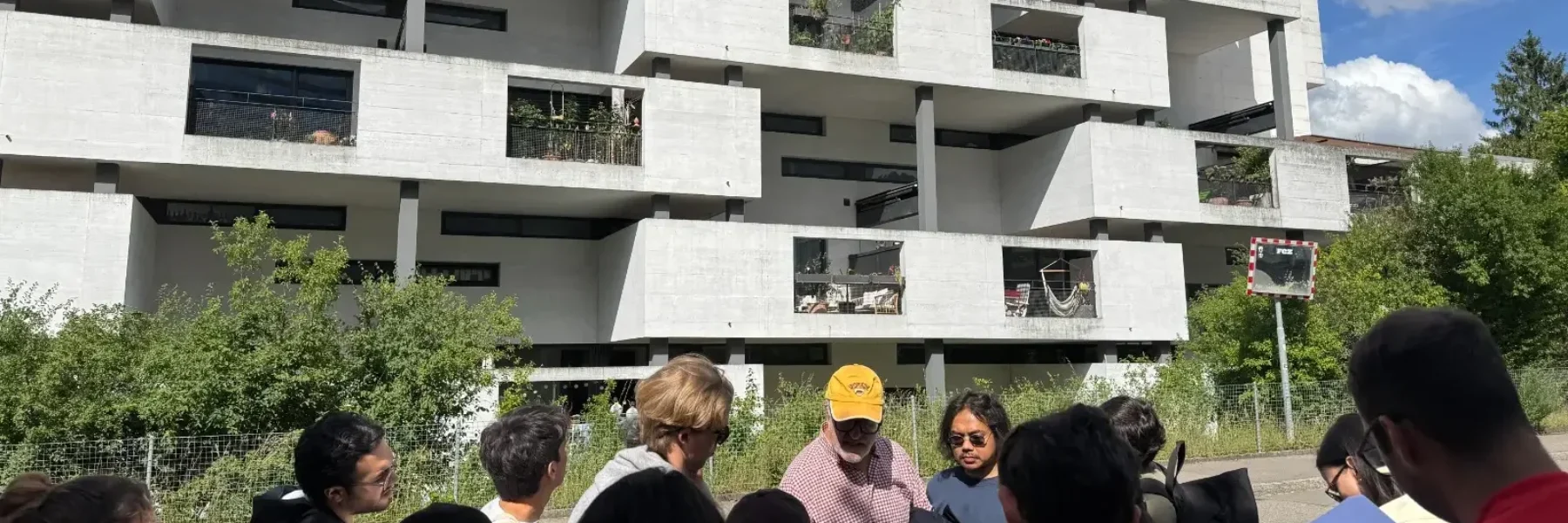
What is Collective Housing?

A Complete Guide to Architecture, Models and Contemporary Practice.

Collective_Housing_Zurich

Collective housing is a residential architecture model in which multiple households share at least one common space within a larger building, while keeping their own private living units. It is one of the most significant fields of contemporary architectural practice, shaped by urbanisation, the affordability crisis and the search for more sustainable ways of living together.

The term covers a wide spectrum of typologies — from cooperative housing and cohousing to social housing, public housing and the more recent co-living model. What unites them is a shared idea: that the building is not just a sum of private flats, but a designed environment for collective life.

This guide explains what collective housing is, how it differs from related models, where it comes from, the most influential examples around the world and why it has become a critical area of study for architects today.

1. Definition:

What is Collective Housing?

Although there is no universally agreed definition of Collective Housing, the term generally refers to residential developments that integrate individual dwelling units with shared communal spaces. These environments are designed to accommodate multiple households within a single building or complex, fostering varying degrees of social interaction, resource sharing, and collective living.

Unlike single-family housing, collective housing is built around the relationship between the private and the common. Each household maintains its own private space—which may include its own bedrooms, kitchen, studios and/or bathroom—while also being part of spaces shared by all residents. These may include the aforementioned programs, as well as entrance halls, courtyards, gardens, laundries, communal kitchens, rooftops, libraries, or workshops.

We could define three levels of collective housing as a field of architectural practice:

Multiple households living in a single building or coordinated complex, with common spaces of interconections.

Common spaces and services that go beyond purely circulatory areas (like common kitchens, studios, co-work spaces, etc.)

A deliberate architectural project for collective life, rather than the simple stacking of identical flats.

This is precisely the field explored by the Master in Collective Housing, the postgraduate program jointly offered by Universidad Politécnica de Madrid and ETH Zurich since 2008.

2. Collective Housing/Cohousing/Co-living

The vocabulary around shared living can be confusing. Cohousing, co-living and collective housing are related but distinct concepts.

Cohousing Co-living Collective housing
Origin Denmark, late 1960s 2010s, global cities Modernist Europe, early 20th c.
Governance Resident-led, participatory Operator-managed Variable (public, private, cooperative)
Ownership Usually cooperative Rental, short to mid-term Any (rental, ownership, social)
Shared spaces Common house, gardens, kitchen Kitchen, lounge, work areas Courtyards, halls, services
Typical residents Families, intergenerational Young professionals, students Full spectrum

In short: cohousing is a specific governance model based on resident participation; co-living is a commercial product oriented to short-term flexible living; and collective housing is the broader architectural category that contains both — and many other models — as particular cases.

Read more on each model:
What is co-living and what is its function?
What is the meaning of co-housing

3. A Brief History of Collective Housing

Although humans have lived collectively for centuries, collective housing as a designed architectural field is a product of the early twentieth century, when European cities had to respond to mass urbanisation, industrial labour and post-war reconstruction.

The interwar period (1920s–1930s) produced some of its most radical experiments. Red Vienna built the Karl-Marx-Hof (1930), a 1,300-flat workers’ superblock with internal courtyards, laundries and kindergartens. In Moscow, the Narkomfin building (Ginzburg, 1932) tested communal life as an explicit social project. In Spain, Madrid built the Casa de las Flores (Zuazo, 1931), reinventing the central block with generous courtyards and light for every flat.

The post-war period (1945–1970) saw collective housing become the dominant form of European urban growth. Le Corbusier’s Unité d’Habitation in Marseille (1952) proposed an entire “vertical neighbourhood” with shops, school and roof terrace inside one building. Barcelona’s Casa Bloc (Sert, Torres Clavé and Subirana, 1932–1939), built for workers, is one of the most coherent examples of GATCPAC’s social agenda.

From the 1990s onwards, the field has shifted again. The collapse of large-scale public housing programs, the rise of urban speculation and growing concern with sustainability, ageing and loneliness have driven a return to participatory, cooperative and ecological models. From La Borda in Barcelona to Kalkbreite in Zurich. Collective housing is today as much about social design as it is about formal architecture.

For a broader survey of recent European collective housing, see #HOUSETAG: European Collective Housing 2000–2021.

4. Iconic Examples of Collective Housing

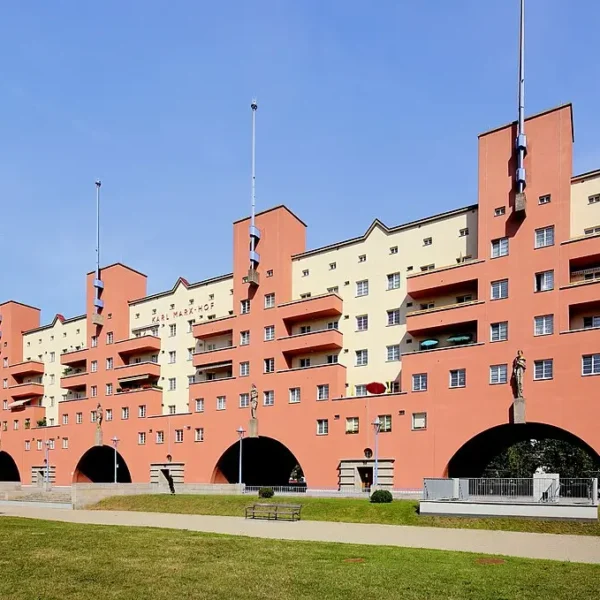
Karl-Marx-Hof — Vienna, 1930.

Karl-Marx-Hof — Vienna, 1930.

Karl Ehn's kilometre-long superblock for Red Vienna's social housing programs. Combined private flats with public laundries, libraries, baths and gardens. The defining work of municipal collective housing. Photo: C.Stadler/Bwag, CC BY-SA 4.0, via Wikimedia Commons.
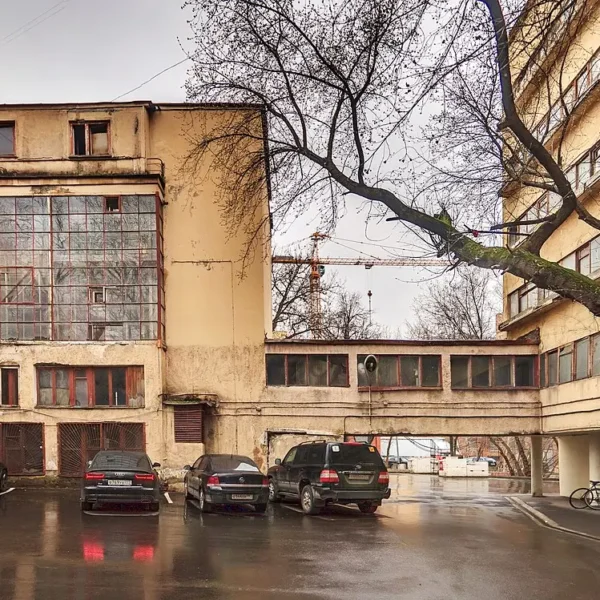
Narkomfin — Moscow, 1932

Narkomfin — Moscow, 1932.

Designed by Moisei Ginzburg and Ignaty Milinis as a "social condenser": flats with no kitchen, paired with a communal building containing kitchen, dining hall, library and roof terrace. Photo: Ludvig14, CC BY-SA 4.0, via Wikimedia Commons.
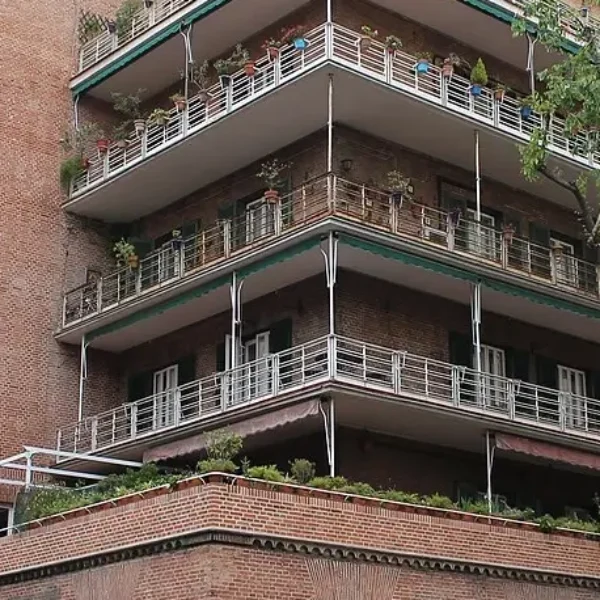
Casa de las flores, imagen propia - MCH.

Casa de las Flores — Madrid, 1931.

Secundino Zuazo's manifesto block. Two parallel blocks separated by a large central courtyard, with every flat opening to both a quiet inner garden and the street. Photo:Casa de las Flores by MCH, CC BY-SA 4.0, via web MCH.
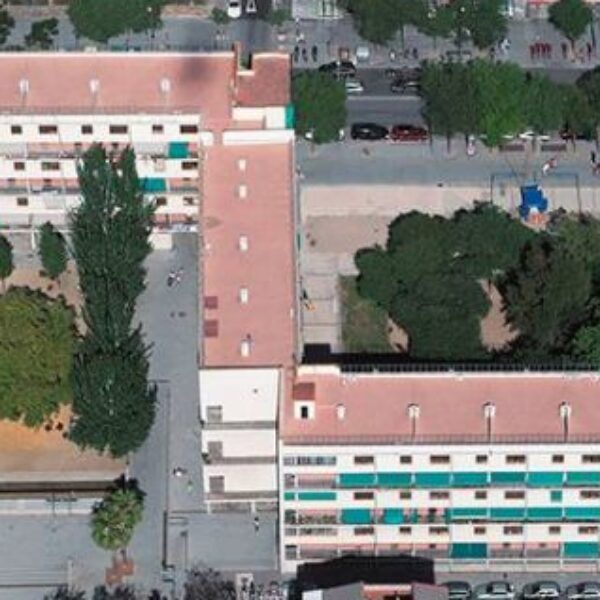
Casa Bloc — Barcelona, 1939.

GATCPAC's redent-type block of workers' housing with duplex flats, common courtyards and a school. A canonical example of rationalist social housing in Spain. Photo: Casa Bloc by MCH, CC BY-SA 4.0, via web MCH.
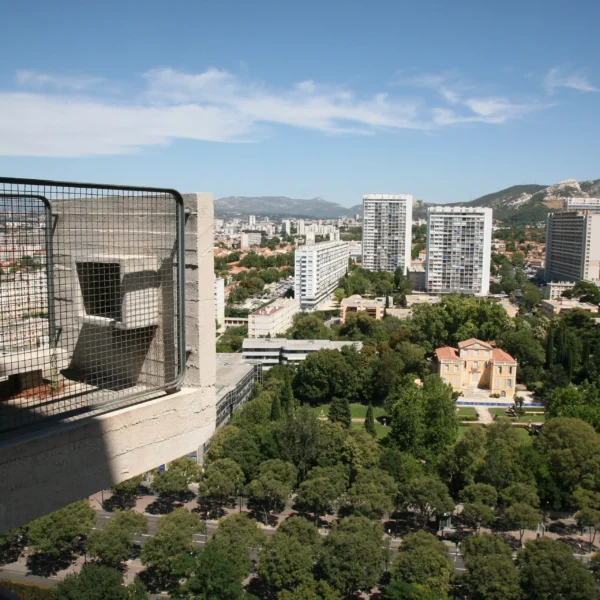
Unité d'Habitation — Marseille, 1952.

Le Corbusier's "vertical city" for 1,600 residents, with internal shopping street, school and roof terrace. The most influential collective housing prototype of the twentieth century. Photo: vincent desjardins, CC BY 2.0, via Wikimedia Commons.
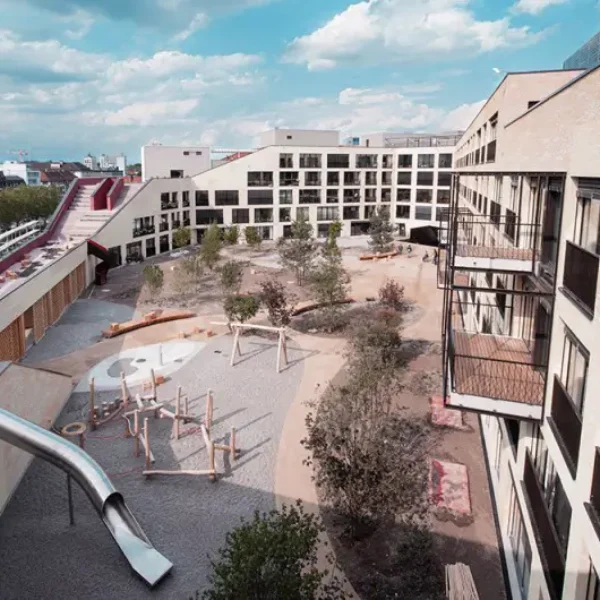
Kalkbreite — Zurich, 2014

Kalkbreite — Zurich, 2014.

A cooperative building on top of a tram depot, with mixed flats, shared kitchens and rooms, workshops and shops. A reference of contemporary Swiss collective housing. Photo: By Bub37 - Template:Pension Kalkbreite, CC BY-SA 4.0, via Wikimedia Commons.

5. Contemporary Approaches:

Sustainability, Affordability and Density

Contemporary collective housing is shaped by three converging pressures: the climate crisis, the affordability crisis and the limits of urban growth. Each one is producing its own design responses.

Sustainable Collective Housing

Buildings account for around 40% of global energy consumption. Collective housing is responding with passive design strategies, renewable energy, low-carbon structures and circular construction systems.

The Passivhaus standard, originally developed for single houses, is now being applied to large residential blocks across Europe.

What is a Passivhaus building?
Prefabricated timber construction systems.

Affordable and Social Housing

Affordability is the structural problem of the field. Public, cooperative and non-speculative models are returning as serious answers. Initiatives such as AHA (Affordable Housing Activation), promoted by the International Union of Architects, frame access to decent housing as a global priority for the profession.

Urban Density and the Future City

Collective housing is the architectural form best equipped to deliver compact, mixed, walkable cities. Designing higher densities without losing quality of light, ventilation, privacy and public space is the central problem of contemporary urban housing. New cooperative buildings in Zurich, Barcelona and Vienna show that density, sustainability and affordability are not contradictory — they reinforce each other when good architecture mediates between them.

6. Why Study Collective Housing?

Collective housing is no longer one specialism among many: it has become the most relevant architectural and urban question of our time. Cities are growing, housing is becoming inaccessible, the climate emergency demands new ways of building, and the social fabric of neighbourhoods is being rewritten by ageing, migration and new forms of family life.

Designing in this context requires more than formal skill. It requires an understanding of building regulations, financing models, urban policy, construction systems, sociology of housing and the cultural history of dwelling. Few subjects in architecture combine such diversity of knowledge.

For architects who want to specialise in this field, dedicated postgraduate programs that combine theory, practice and international exposure are essential. The Master in Collective Housing — jointly offered by Universidad Politécnica de Madrid and ETH Zurich since 2008 — brings together leading practitioners and academics around exactly this question.

This body of knowledge is captured in references such as Collective Housing: A Manual.

Collective Housing FAQs

Social housing is a funding and policy category: housing produced or subsidised by the public sector for people who cannot access market prices.

Collective housing is an architectural category: any residential building combining private units with shared spaces. Much social housing is collective housing, but not all collective housing is social.

No. Cohousing is a specific governance model originated in 1960s Denmark, based on resident participation and a strong common house. Collective housing is the broader architectural field that includes cohousing as one of its variants, along with cooperative, social, public and co-living models.

Collective housing refers to residential buildings designed for multiple households — from apartment blocks to social housing complexes and co-living models. It is one of the most pressing challenges in contemporary cities, where housing shortage, affordability, and urban density require new architectural and policy responses. MCH trains architects to work at the forefront of this field.

The most common types are public or social housing, cooperative housing, cohousing, co-living, mixed-use residential blocks and intergenerational housing. They differ in ownership, governance and the intensity of shared space — but all share the basic idea of multiple households living within a designed common environment.

Few programmes are dedicated specifically to collective housing.

The Master in Collective Housing (MCH), jointly offered by Universidad Politécnica de Madrid (UPM) and ETH Zurich, is one of the most established international postgraduate programmes in this field, with eighteen editions and more than 400 alumni worldwide.

Karl-Marx-Hof (Vienna, 1930), Narkomfin (Moscow, 1932), Casa de las Flores (Madrid, 1931), Casa Bloc (Barcelona, 1939), Unité d’Habitation (Marseille, 1952), Kalkbreite (Zurich, 2014) and La Borda (Barcelona, 2018) are some of the most studied references in the field.

In general, yes. Shared walls reduce energy losses, density reduces land consumption and infrastructure costs, and shared services (heating, laundry, transport) cut per-capita energy use. When designed well, collective housing is one of the most effective architectural responses to the climate crisis.