



2026 Specialty – Climate, metabolism and architecture / Javier García-Germán
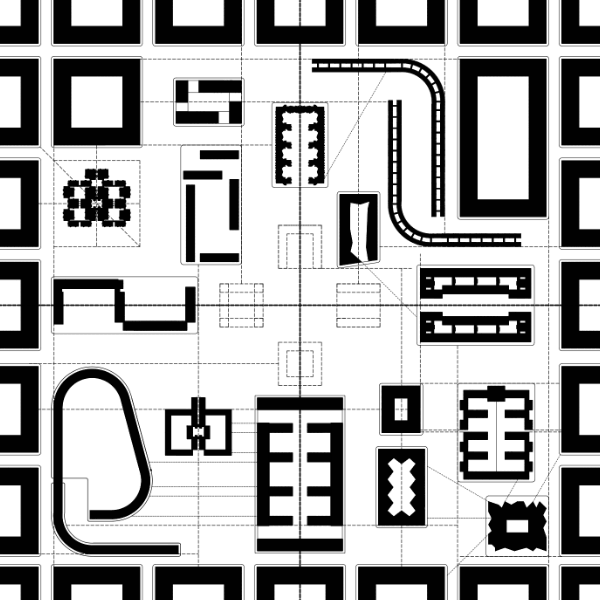
Cover by students Eslami, Riera, Sarango, Sokhasvili, Tretti.
Specialty Leader: Javier García-Germán
Designing Climatic Typologies for the Atlantic Coast of Morocco: Agadir
The specialty departs from the intrinsic relationship between climate, territory, and the forms of life developed by its inhabitants. Rather than understanding climate merely as a technical constraint, the studio approached it as a cultural and spatial condition capable of shaping architecture, domesticity, and collective behavior. This perspective opened a broad field of inquiry into the ways climatic conditions influence everyday life, social interactions, clothing practices, inhabitation patterns, and the spatial rituals associated with particular geographies. In this sense, the course proposed a thermodynamic and ecological understanding of architecture, one that investigates the reciprocal interactions between local climates, material systems, spatial organization, and the physiological and psychological dimensions of human experience.
Contrary to conventional architectural methodologies that usually proceed from exterior form toward interior organization, the studio explored the possibility of designing architecture from the inside outward. The design process began by identifying the atmospheric and environmental conditions required by users in their daily activities. From these interior climatic demands, students developed spatial and material strategies capable of producing differentiated thermal environments through the careful articulation of energy sources, sinks, air flows, thermal mass, and solar exposure. Architecture was therefore understood not as a neutral enclosure but as an active environmental mediator capable of negotiating between the body and the surrounding climate.
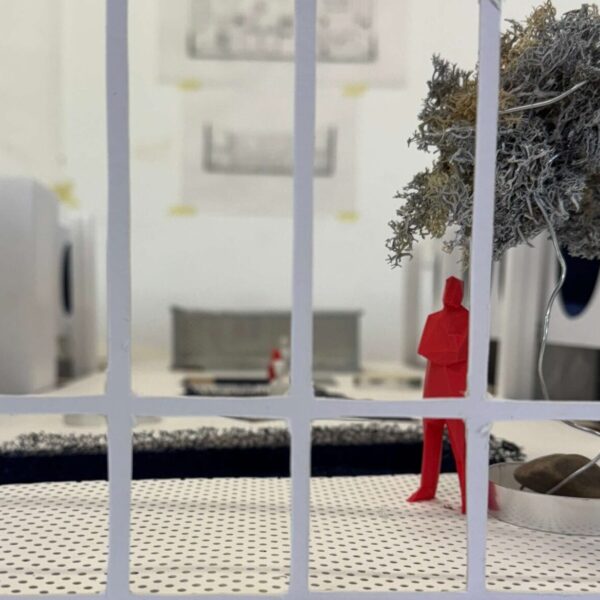
 material research by students Eslami, Riera, Sarango, Sokhasvili, Tretti.

The studio also introduced a critical reconsideration of sustainability beyond the dominant paradigms of energy efficiency and technological optimization. Instead of relying exclusively on mechanical conditioning systems, students investigated passive climatic strategies rooted in orientation, section, materiality, ventilation, shading, and atmospheric transitions. Particular emphasis was placed on the thermodynamic properties of materials and on the role of spatial configurations in extending human comfort ranges. Through this approach, architecture became deeply connected to sensory perception and to the experiential dimensions of everyday life, reinforcing the idea that climatic adaptation is inseparable from cultural practices and patterns of inhabitation.
Urban, landscape, and architectural typologies served as operative tools throughout the workshop. Climatic typologies allowed students to examine how architecture historically mediated between specific environmental conditions and forms of collective life. By studying vernacular precedents and contemporary examples, students analyzed the ways in which material systems, urban morphologies, and domestic organizations respond to local climates while simultaneously shaping social relations and behavioral patterns. This investigation bridged the gap between thermodynamic processes and the lived realities of inhabitants, linking environmental performance to the spatial and psychological qualities of architecture.

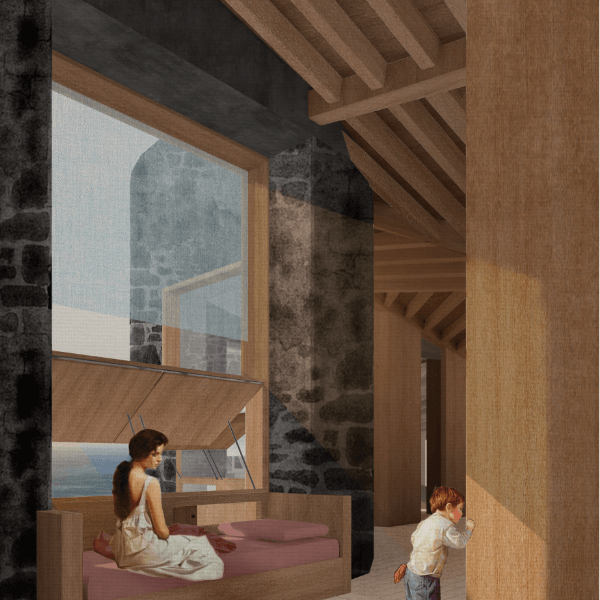
Climate living performance by students Hernandez, Mayorga, Petrucci, Reyes, Torres.
The workshop progressed through a sequence of scales and exercises. Beginning with the observation of quotidian situations, students first developed interior climatic spaces before gradually expanding their proposals toward collective housing systems. Working in groups, each team operated within a shared climatic zone while addressing the particularities of a specific site and social context.
This year, the studio focused on the Atlantic coast of Morocco, particularly the region surrounding Agadir, exploring the interaction between arid coastal climates, urban form, and domestic life. Students analyzed the physiological adaptation of the human body to conditions of intense solar radiation, humidity variations, and seasonal thermal oscillations. Documentary photography, ethnographic observation, and cultural references were used to understand how architecture mediates between climate and everyday practices. Through the study of local lifestyles, clothing traditions, inhabitation patterns, and urban landscapes, students examined how cultures evolve in direct response to environmental conditions. Analytical tools such as Climate Consultant software and psychrometric charts supported this research by providing a more precise understanding of climatic performance and human comfort.
 Climate living performance by students Hernandez, Mayorga, Petrucci, Reyes, Torres.

Building upon this analytical phase, students translated climatic observations into architectural hypotheses. Environmental phenomena such as solar exposure, prevailing winds, thermal inertia, humidity, and diurnal temperature variation were approached not as limitations but as generative design inputs. By mapping climatic data against physiological comfort ranges, students developed proposals capable of mediating between exterior and interior environments through sections, courtyards, thresholds, transitional atmospheres, and material assemblies. This process encouraged a shift from abstract environmental analysis toward precise architectural interventions rooted in spatial experience and thermodynamic thinking.
 Axo by students Eslami, Riera, Sarango, Sokhasvili, Tretti.

The workshop was complemented by a series of invited lectures and discussions that expanded the disciplinary framework of the studio. Pablo Pérez-Ramos (Harvard GSD) contributed reflections on ecology, landscape, and environmental design methodologies. Pablo Garrido (PARABASE) introduced experimental perspectives on material systems and contemporary tectonics, while Antón García-Abril (ENSAMBLE Studio) shared his research on matter, construction, and structural expression. Adrien Verschuere (Baukunst) and Fernando Rodríguez (FRPO) discussed the relationship between typology, domesticity, and collective living, emphasizing the cultural dimensions of architecture. Finally, Pablo Sequero (Salazar Sequero Medina) contributed perspectives on housing, urban form, and climatic adaptation within contemporary architectural practice.
The final reviews brought together an international jury composed of Jaume Mayol (TED’A arquitectes), Daniel Ibáñez (Urbanitree), and Iñaki Ábalos (Ábalos + Sentkiewicz). Their participation consolidated the workshop as a space of critical exchange where questions of climate, metabolism, material ecology, and collective inhabitation were discussed through the disciplinary tools of architecture. The reviews emphasized architecture’s capacity to operate simultaneously as a cultural, environmental, and atmospheric practice capable of responding critically to the challenges of contemporary climate conditions.
About Javier García-Germán