


2025 Specialty – Sociology, Economy and Politics / Daniel Sorando
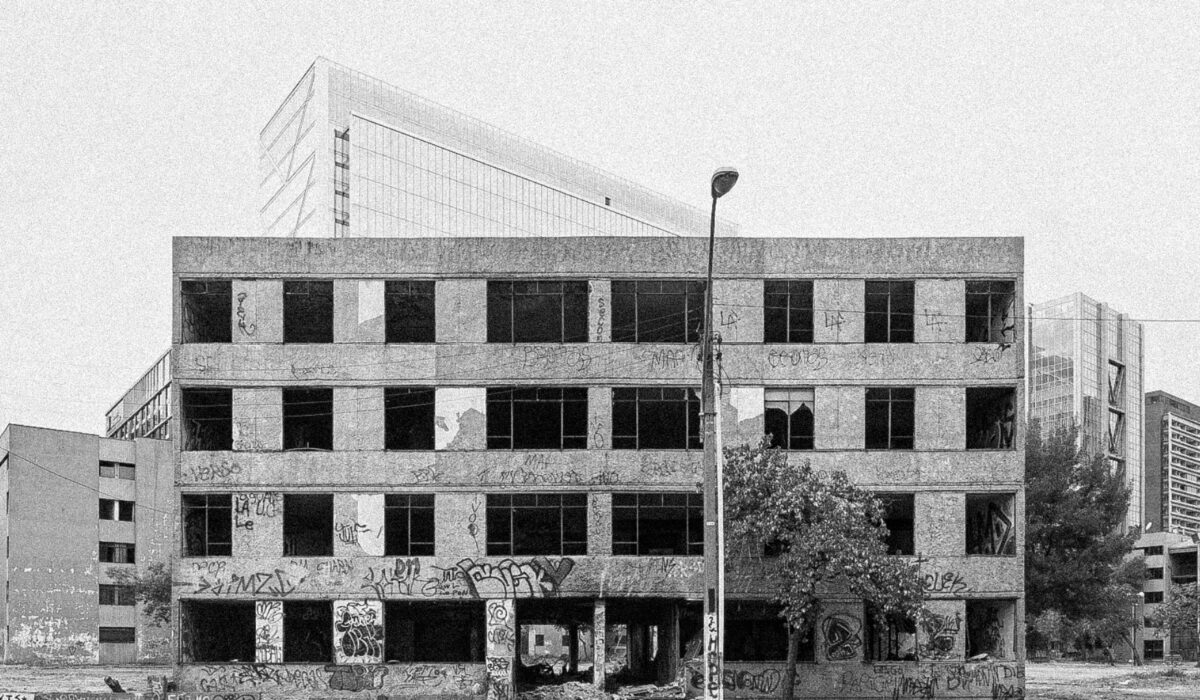
Villa San Luis Chile – Research by student Luis Molina
Specialty Leader – Daniel Sorando
The Sociology, Economics, and Politics specialty provides students with an interdisciplinary framework to critically address the complexities of collective housing and its role in shaping contemporary cities. By examining these three variables, students are encouraged to understand the mechanisms that drive urban dynamics, the challenges currently faced by cities, and the possibilities for future development. This training equips them to analyze housing and urban planning not only as technical processes, but also as socially embedded and politically contested phenomena.
Sociological perspective. Students examine demographic trends, migration flows, and patterns of urban growth, complemented by fieldwork and data analysis. This approach enables them to identify how populations are distributed across urban space, what social needs emerge in different neighborhoods, and how issues such as community identity, gentrification, and touristification reshape urban life.
Economic perspective. The course investigates the influence of state investment strategies, financial crises, and real estate speculation. Housing is analyzed both as a market commodity and as a fundamental right, highlighting the tension between affordability and accessibility. By studying housing supply, demand, tenure systems, and subsidy mechanisms, students gain insight into the structural factors that condition urban inequality.
Political and policy perspective. The evolution of regulatory frameworks and urban policy is critically assessed through local and international case studies. Special emphasis is placed on urban regeneration programs, social housing strategies, and sustainability policies, with a focus on their effectiveness in transforming urban landscapes and improving living conditions.
Pedagogical approach and critical exchange
A distinctive feature of the speciality is the debate and dialogue among international students, who bring diverse architectural training and lived experiences from different urban contexts. Classroom discussions become a platform for comparing case studies, contrasting methodologies, and questioning dominant paradigms. This exchange fosters critical thinking and cultivates an awareness of how cultural, political, and economic differences shape urban challenges worldwide.
At the same time, students are trained to combine technical analysis with reflective inquiry. The integration of empirical research methods, statistical data, field observation, and theoretical frameworks strengthens their ability to conduct rigorous and context-sensitive urban analysis.
Final assessment: critical case study analysis
Each student develops an individual essay focusing on a specific case study, either local or international, directly linked to the course themes. This assignment deepens their capacity to critically examine urban problems, assess innovative housing solutions, and evaluate their transferability to contexts such as Madrid or comparable cities.
The essays are subsequently presented and debated in group sessions, allowing students to test their arguments, compare findings, and refine their perspectives through peer exchange. This process reinforces the specialty commitment to reflection, interdisciplinarity, and collaborative learning, preparing participants to engage in advanced debates on housing and urban development.
 An empty city heart: The housing crisis in Monterrey – Research by student Mariana Cantú
About Daniel Sorando
Author: Camilo Meneses. MCH Manager
