



2025 – New Technologies in Architectural Design
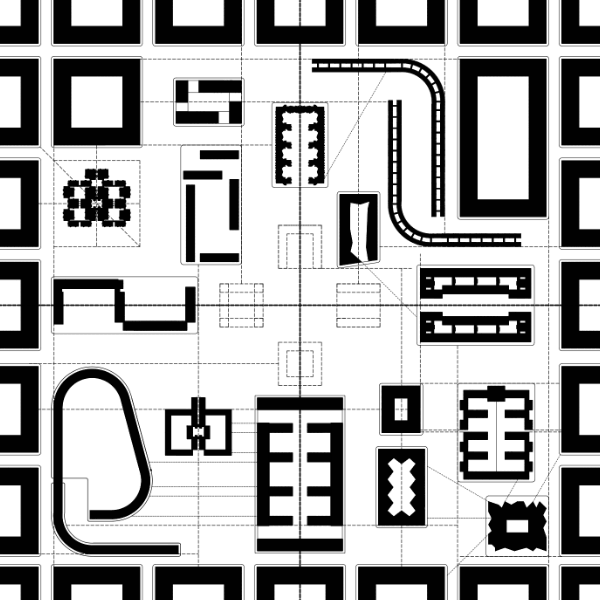
Cover image by students Ahn, Chamberlin, Kaloudis
Specialty Leader: Sergio del Castillo Tello
Professor John Porral
March/April 2025
 Image by students Ahn, Chamberlin, Kaloudis
The module New Emerging Technologies in Architectural Design explored how digital tools, algorithmic thinking, and artificial intelligence are transforming our approach to housing design. Students were introduced to these emerging technologies not as isolated software skills, but as design drivers capable of reframing architectural authorship, spatial organization, and our relationship with the environment.
The module was structured around three thematic axes.
The first, Introduction to Emerging Technologies, offered a general overview of the evolution of digital and computational design (from GSP to GANs), the integration of BIM, CIM, GIS, and parametric modeling, as well as the application of VR, AR, and XR in architectural visualization, supported by a theoretical foundation in interrelationalism—understanding architecture as a system of connections.
The second axis, Advanced Applications in Design, addressed AI and machine learning processes for generative design and data-driven decision-making, sustainable and metabolic design logics with an emphasis on energy awareness, algorithms in fabrication and robotic construction, along with evolutionary design, topological logic, and scenario-based variation.
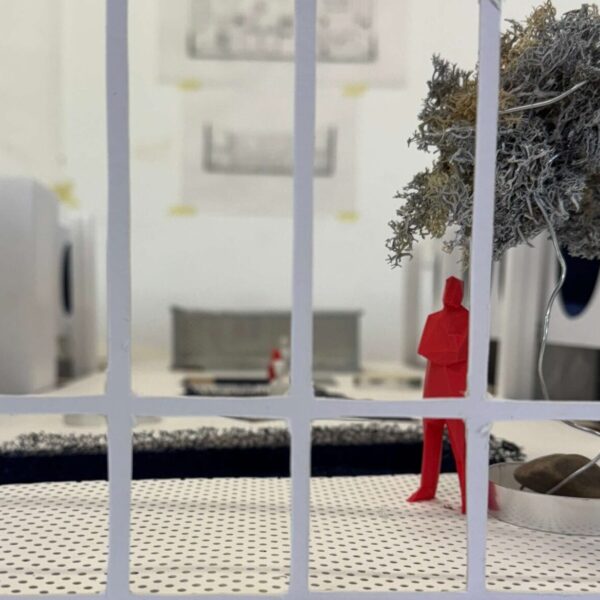
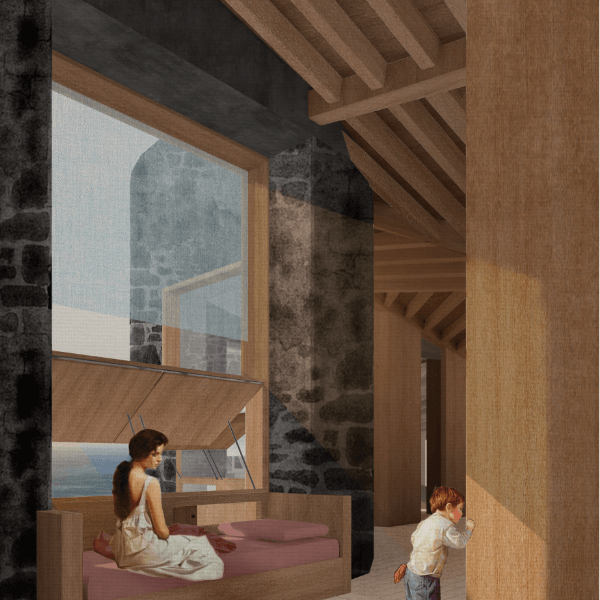
The third axis, Hands-On Prototyping, involved the students constructing a Gizmo (a graphic, generative relational engine), developing a 3D-printed prototype based on its logic, creating AI-generated visualizations of spatial speculations, and working with real-time tools to refine, reinterpret, and remix design variations.


Image by students Begino, Chauhan, Jamdar
This module emphasized that new technologies are not about automation, but about expanding the capacity for adaptive, open-ended, and systemic design. The design workshop titled “The House, the Tree, and the Meadow: Setting Interrelational Systems” introduced a radically simple brief: “We must design a house, in a meadow, next to a tree.” These three fundamental elements were not to be treated as literal inputs, but as relational vectors that allowed each group to define their own set of spatial, social, and environmental interdependencies.
Each project began with a key question: “What are the essential relationships that give form to domestic space in landscape?” From there, each team developed a relational schema (Gizmo) that encoded how these relationships could evolve, interact, and generate architectural consequences. The Gizmo became both a conceptual manifesto and an operational tool, guiding the design of prototypes capable of spatial variation and systemic evolution.

3d model by students Ahn, Chamberlin, Kaloudis


Final submissions by MCH students
About Sergio del Castillo Tello
About John Porral
Author: Camilo Meneses. MCH Manager