


2024 Workshop – Domestic Fragments / Elli Mosayebi
Cover image by students Ferre, Madonado and Martinez
Workshop Leader: Elli Mosayebi
Workshop Assistant: Alvaro Martín Fidalgo
Date: 15th to 19Th of July
A critical intellectual engagement with forms of contemporary urban housing serves as the focus of the studio project, in the design of an apartment. In this, design is to be understood as an instrument for experiencing the present age and generating knowledge. The modest scale of the projects will allow us to concentrate on the many themes of the interior, the form of dwelling, fundamental architectural elements and the climate.
In the centre of the discussion are the questions raised in the introduction: how is innovation in housing possible and what might it mean? Can housing be said to innovate at all? What is the relationship between activities, functions and space? Can we imagine dwelling spaces whose qualities are not derived primarily from the satisfaction of function, but rather from an abstract spatial dimension? Furthermore: for whom are we building such spaces? In light of the atomisation of people’s concepts of life, can we even conceive of dwelling spaces beyond neutral functional programmes? And finally, what does it mean to build in the non-city or the countyside? What are the requirements of the contemporary urban cultures of living? How are they expressed in the non-urban context?
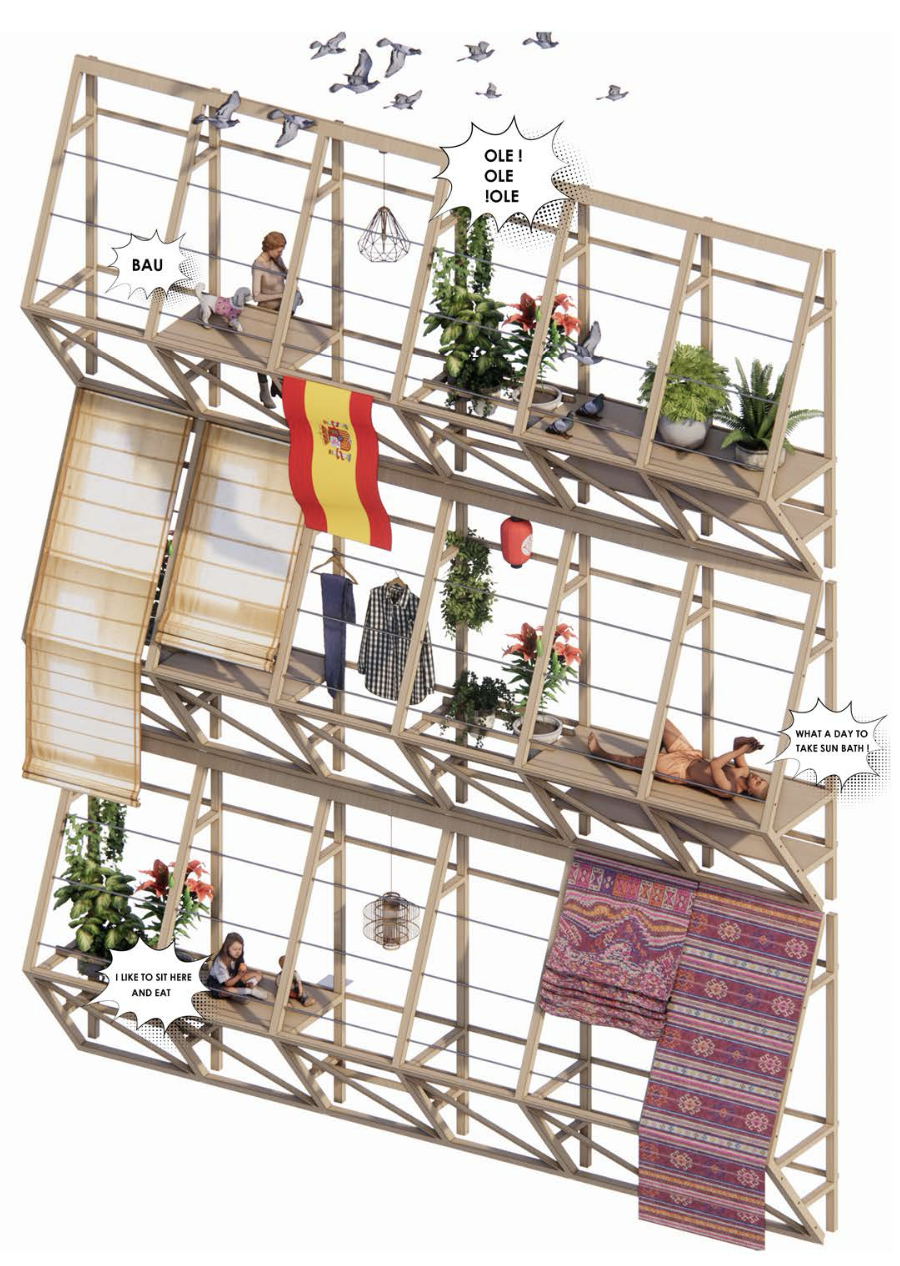
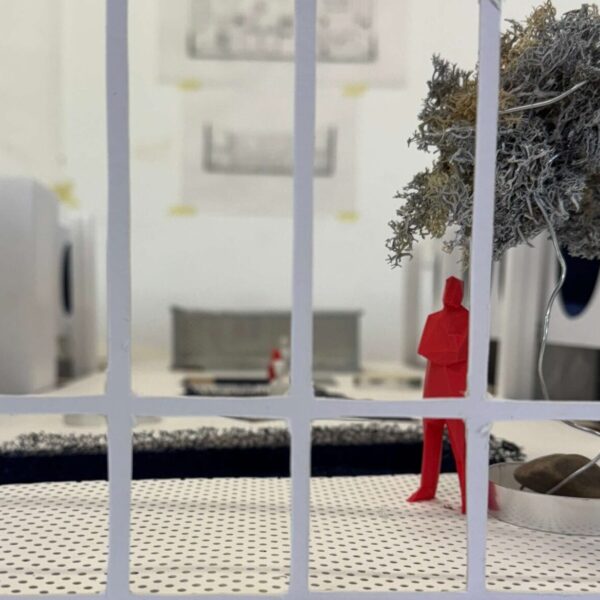
Image by students Voruz, De Luca and Patel
About the assignment.
The exercise consists in the design of a collective dwelling as a climatic shelter, where the fundamental threshold -the window as the main element- serves as a low-tech artifact in direct response to the given climatic condition. The project, located somewhere in the non-urban Spanish territory, will be compatible with an emerging collective operating in today’s society, and the dwelling shall be inhabited by several people living independently of each other. For this each group must present:
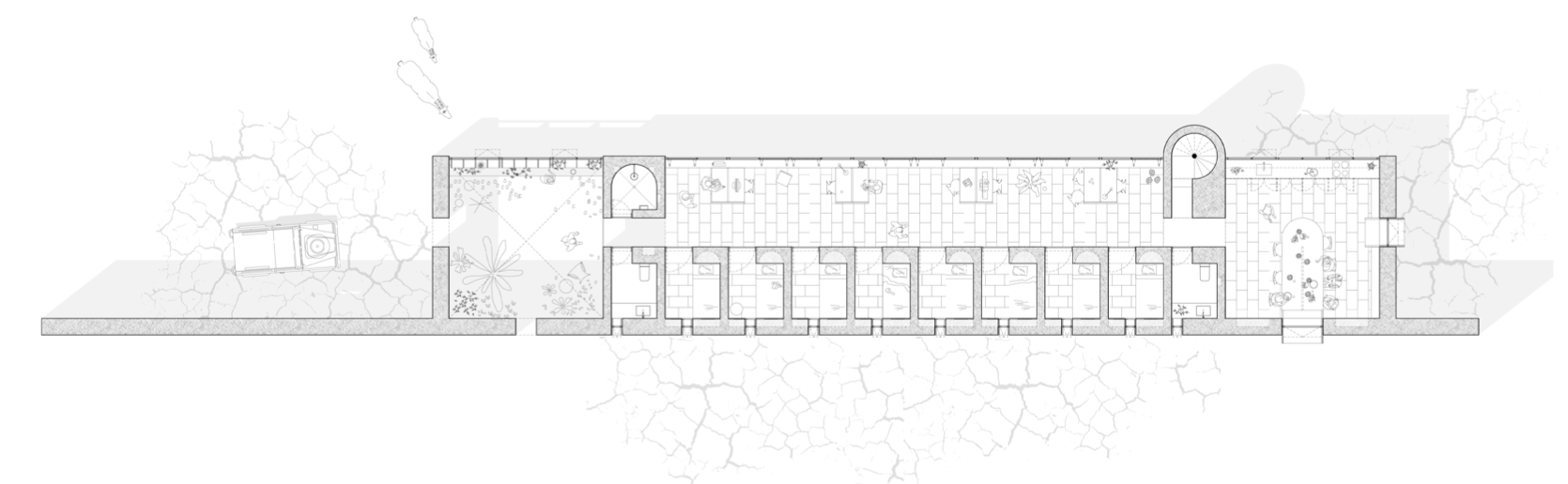
Floor plan by students Gaxiola, Nikolskaia and Ucha
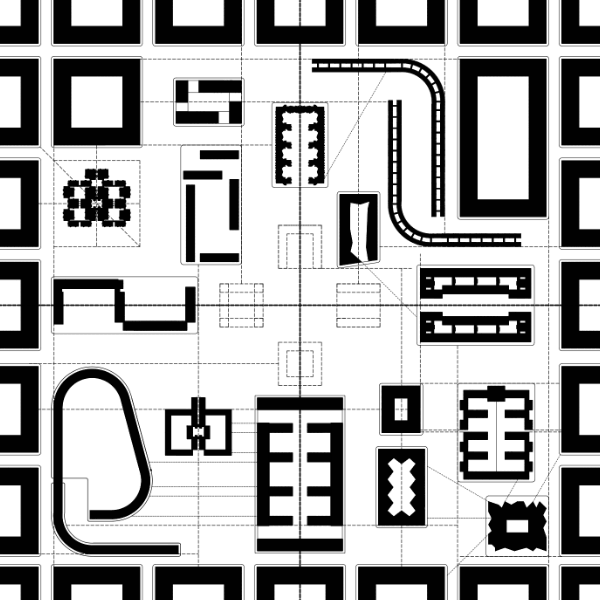
Floor Plan. The most important instrument for the design project, as well as for its representation, is the floor plan: an abstract yet also the most communicative kind of notation for a spatial configuration. Besides the representation of the architectural space, the floor plan will also serve the investigation of the pictorial and metaphorical qualities of such drawings (to a certain extent, the inherent qualities of this kind of drawing) and to make use of these qualities in the design. Alongside this, a significant emphasis is to be given to the graphical techniques, precision and sensuous qualities of the drawings.
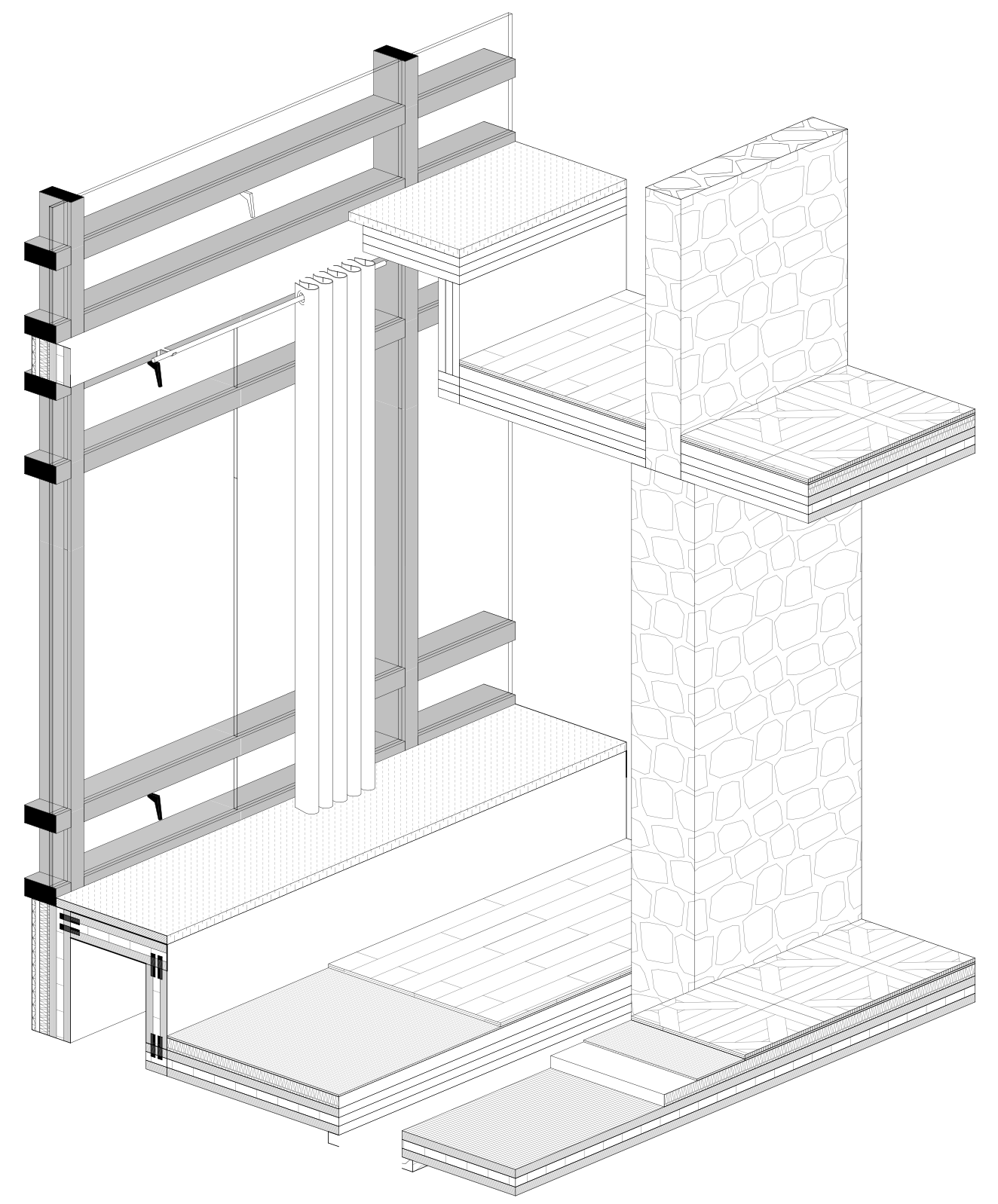
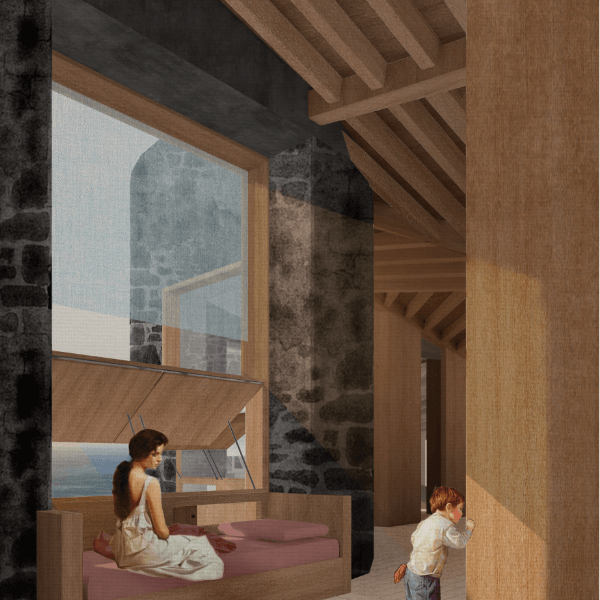
Detail by students Yasser, Mandi and Delgado
Detail. The devil is in the details. Construct and draw a window detail relevant to the design at a scale of 1:20 (or 1:10) that reflects the architectural idea. The detail should contain a low-tech approach as sufficient artifact in relation to its climate. This threshold between inside and outside becomes, on the one hand, the primary vehicle that provides clues as to how domesticity develops, and on the other, it also directs the decision making about the floor plan.
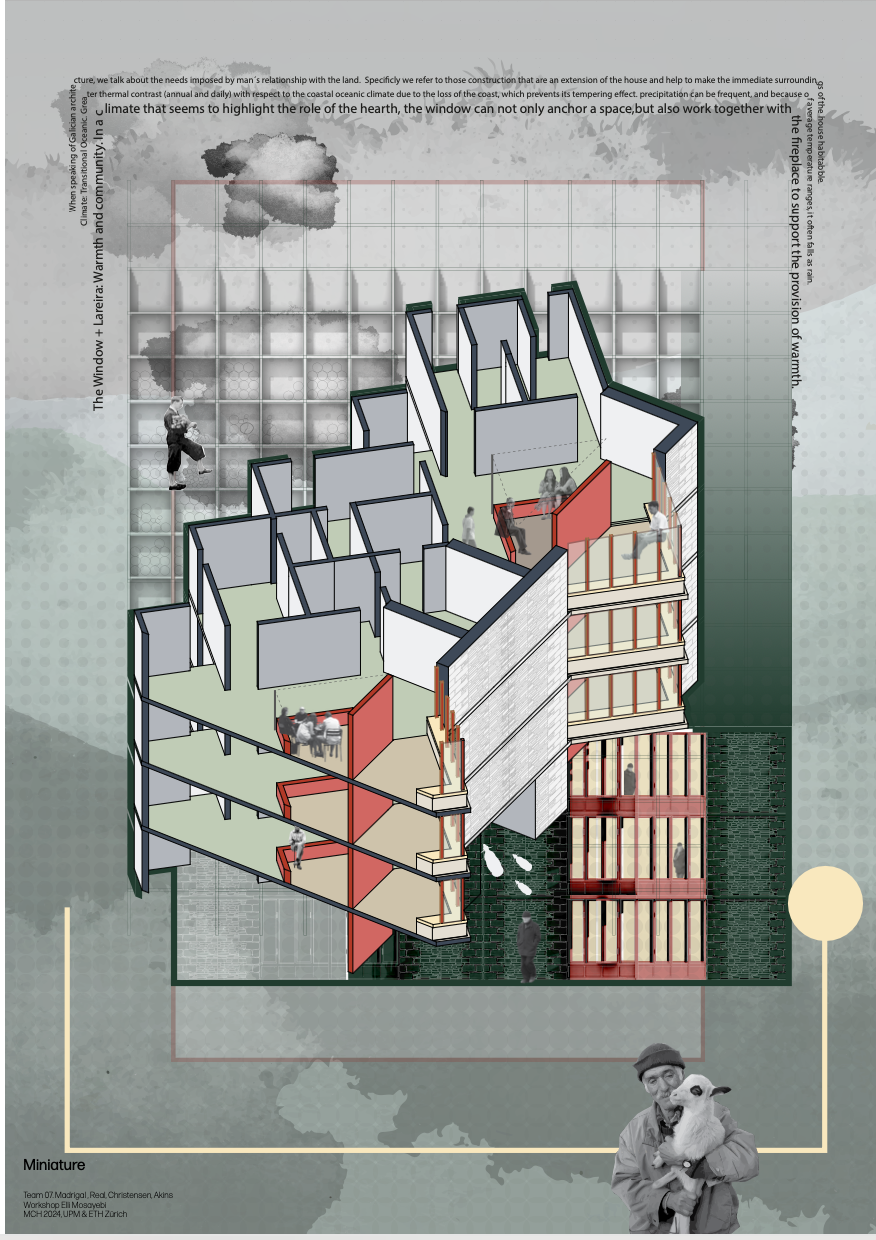
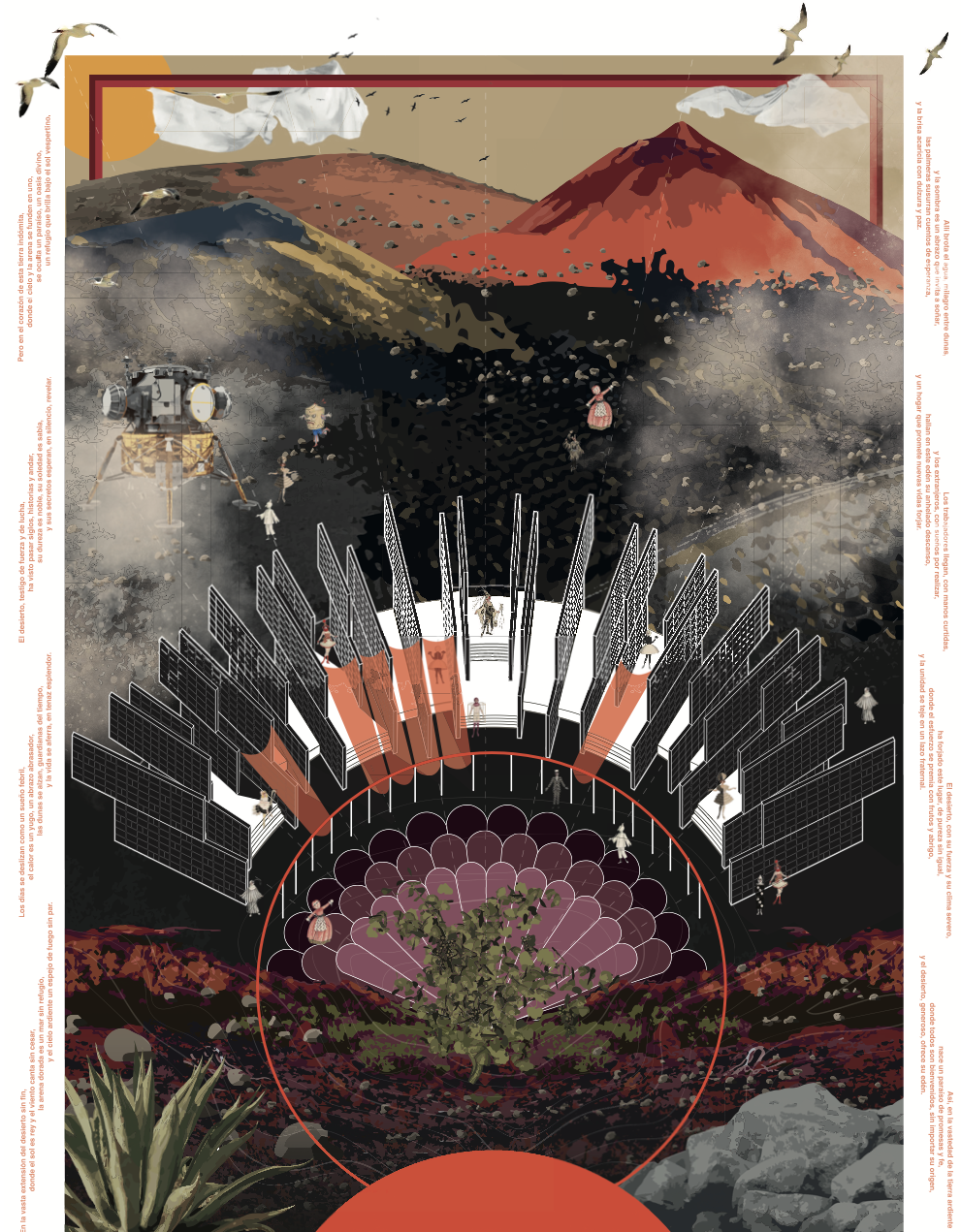
Miniature by students Madrigal, Real, D. Christensen and Akins
Miniature. The technique of Persian miniature painting interests us in the design because it manages to convey complex relationships – entire narratives – in a single image. A miniature drawing consists of diagrams, axonometries, representations of acting persons, nature (climate and landscape) and a few sentences explaining the project. It works equally well with images and text.
About Elli Mosayebi.
About Alvaro Martín Fidalgo.