



2024 Workshop – Learning from Tokyo: High-Density Housing in Madrid / Momoyo Kaijima
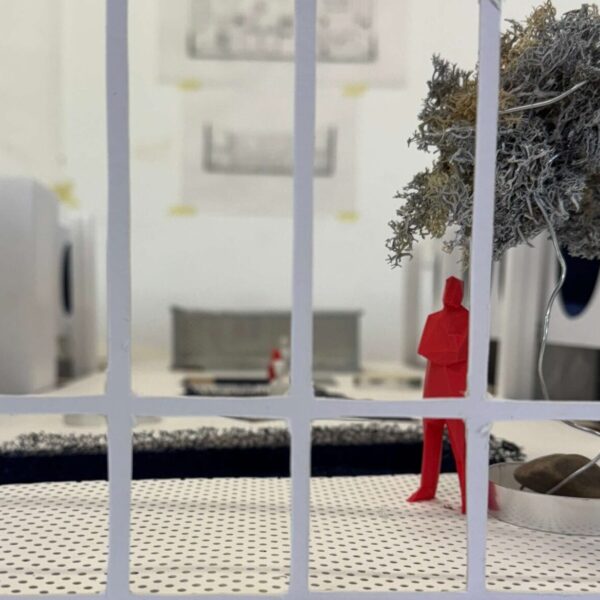
Model image by students D Christensen, Gaxiola, Maldonado
Workshop Leader: Momoyo Kaijima
Assistant: Alberto Nicolau
Date: 31st of October to 04Th of November
With the aim of challenging the hypothesis that Europe’s population can grow without demolishing existing buildings, the studio proposes learning from housing design techniques and living practices in the densely populated 23 wards of Tokyo, and applying these concepts in Europe. Students are asked to propose a project within a chosen scenario based on three key ideas: minimum, floor, and window. The studio will include literature on high-density living in Tokyo, lectures on the subject, and group discussions.
Three Key Ideas:
1. Minimum
During post-World War II reconstruction, the resource-strapped Japanese government established three key pillars. One of these was the Housing Loan Corporation Act of 1950, which created a public finance entity offering loans with a low-interest rate of 5.5% for the construction of private homes, limiting the house area to a maximum of 100 m². Since the loan application required an architect’s confirmation, many architects became involved in the design process. Design competitions were held in architectural magazines and other publications, with notable works such as Yo Ikebe’s “Residence No. 3” (1950) and Makoto Masuzawa’s “Minimal Residence” (his own home) (1952).

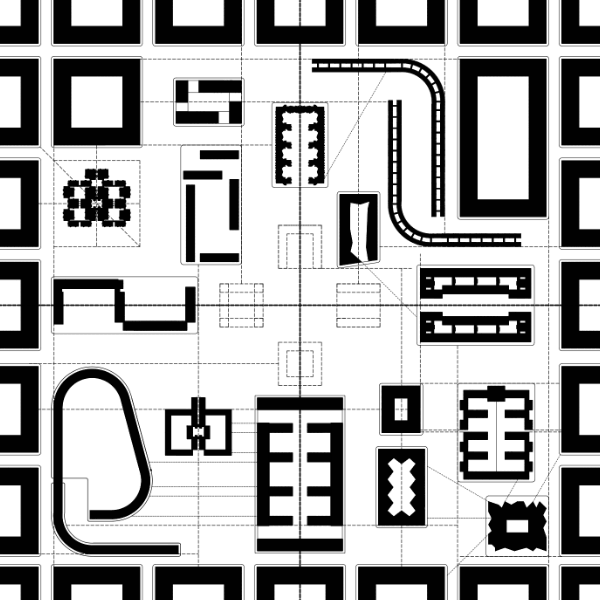
Floor plan by students Nikolskaia, Yasser, Voruz
2. Floors
In traditional European homes, people arranged furniture like beds, tables, and storage within the rooms. In contrast, Japanese traditional houses featured an elevated floor, raised between 30 and 45 cm, where people would remove their shoes and sit directly on the floor. This floor functioned like a large piece of furniture itself. In the 1990s, the demand for high-density urban housing led architects such as Atelier Bow-Wow to develop homes with three-dimensional floors, such as the “skip floor” design.

Model by students Denisova, Real, Ucha
3. Windows
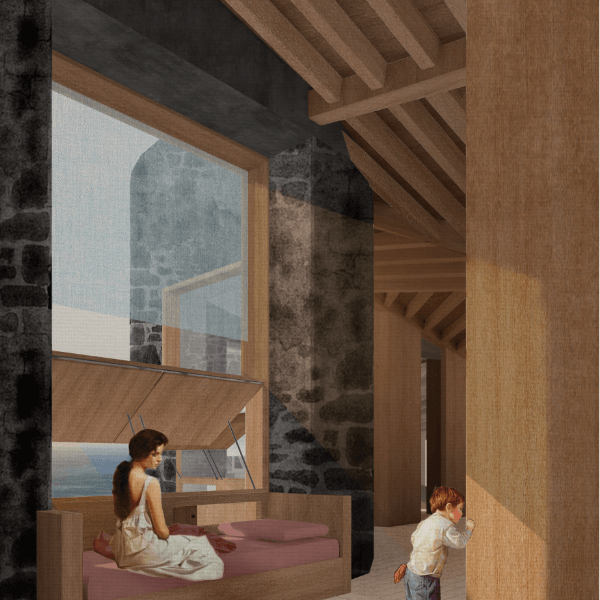
Tokyo’s climate is warm-temperate, with four distinct yet warm seasons, requiring a way of living adapted to these seasonal changes. Windows serve as tools for regulating the environment, and in high-density settings, they play a critical role in creating a sense of openness and fostering connections with the outside.
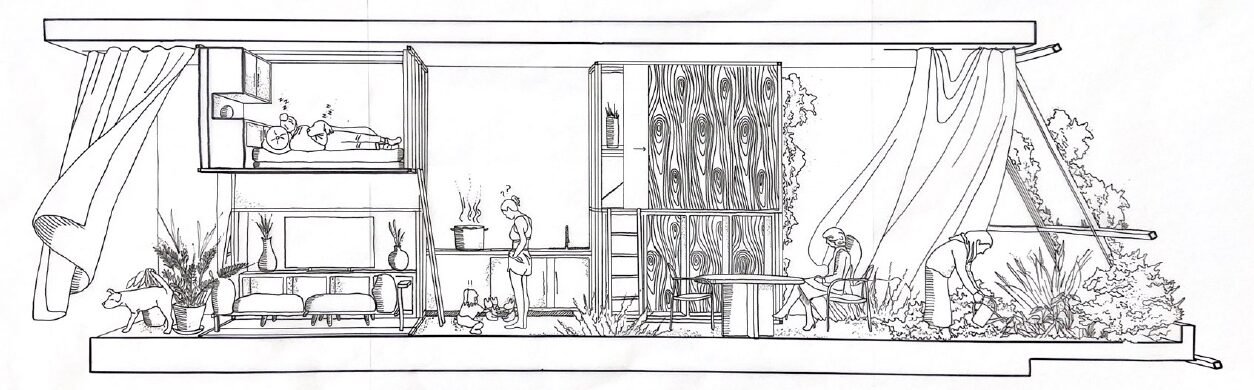
Section by students D Christensen, Gaxiola, Maldonado
Project Development
Each student group is assigned the floor plan of a 300 m² building. They need to develop the entire design, creating both a physical model and a planimetric drawing at a 1:20 scale. The proposal must accommodate 15 people, considering their collective living patterns. Additionally, the proposal is expected to demonstrate an appropriate level of technical detail and façade design.