



2025 Specialty – Climate, metabolism and architecture / Javier García-Germán
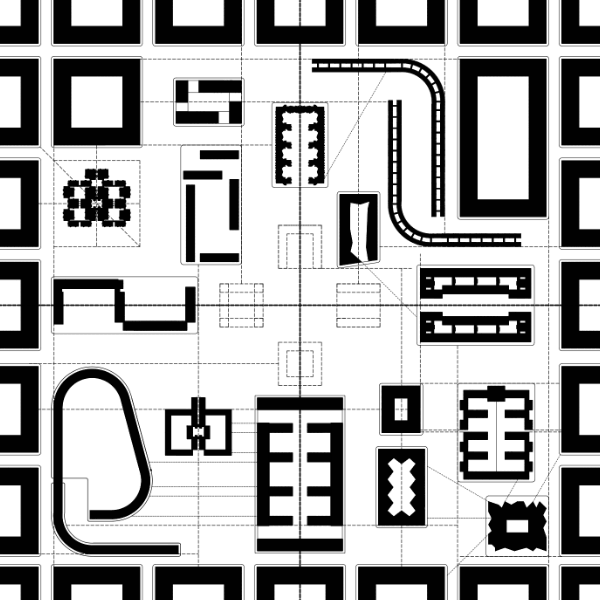
Cover image by students Candano, Azzez, Hernández, Maestre.
Specialty Leader: Javier García-Germán
Designing for the Mediterranean coast of North Africa Climate
This specialty started from the structural relationship between the climate of a given place and the culture developed by its inhabitants. This topic, rarely addressed in architectural discourse, opened up a range of questions about how climate influences social patterns, local lifestyles, clothing practices, and the way spaces are inhabited. From this perspective, a thermodynamic approach to architecture was proposed, one that examined the interaction between local climate, the spatial and material characteristics of architecture, and the lifestyle of its users.
Unlike conventional design methods, which typically follow a top-down approach from exterior massing to interior spaces, this studio proposed beginning the design process from the inside out. The goal was to design a building based on the specific atmospheres required by its users. Starting from the environmental conditions that users needed, students defined the set of energy sources and sinks necessary to generate those particular atmospheres.
From this methodology, the project also introduced a critical reflection on sustainability, understood not merely as energy efficiency but as a deeper adaptation between the building and its environment. Passive climate-control strategies were explored, along with the use of materials with specific thermal properties and spatial configurations that act as tools to regulate comfort without relying exclusively on mechanical systems. In this way, architecture was conceived as an active mediator between external climate conditions and internal human needs, reinforcing the idea that every design decision has direct implications for sensory experience and the everyday behavior of its users.

Image by students Candano, Azzez, Hernández, Maestre.
Urban, landscape, and architectural typologies were used as tools to bridge the gap between local climate and everyday habits. Climatic typologies helped illustrate how architecture can mediate between a given climate and modes of living and socializing, linking spatial and material characteristics to physiological and psychological behaviors, and connecting the thermodynamic processes induced by architecture to the daily activities of its inhabitants.
The studio began with everyday situations as a starting point to define interior space, then progressively explored different architectural scales: first, a climate-responsive interior space, and later, a collective housing program. The work was carried out in groups, with each group developing a project located in a specific area within a shared climatic zone.

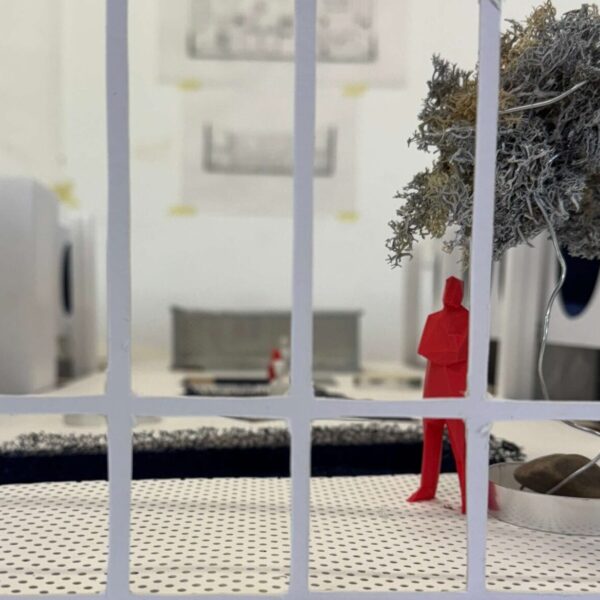
Detail by students Candano, Azzez, Hernández, Maestre.
This year, students began by analyzing the Mediterranean coast of North Africa, around Algiers, focusing on how human physiology adapts to such a climate. Everyday life scenarios provided insight into how people inhabit specific climatic conditions, supported by documentary photography to observe how architecture mediates between people and their environment. Through cultural references, photographs, imagery, etc., students explored the intersection between a particular climate and daily life. This exercise, ranging from architectural references to cultural adaptations such as lifestyles, clothing, and inhabitation patterns, helped analyze how a culture adapts to its geography and climate. Tools like Climate Consultant and the psychrometric chart assisted in understanding the relationship between climate and architectural performance.
Building on this analytical phase, students then translated their findings into design hypotheses, identifying key environmental pressures such as solar exposure, humidity, wind patterns, and diurnal temperature variation. These factors were not treated as constraints but as generative design inputs that shaped spatial organization and material decisions. By mapping physiological comfort ranges against climatic data, students developed a more precise understanding of how built form can extend or mediate human tolerance to environmental conditions. This process encouraged a shift from abstract climatic interpretation to concrete architectural strategies, where sections, courtyards, thresholds, and transitional spaces became essential devices for negotiating between outdoor and indoor environments.

Comuna by students Chauhan, Nimmala, Kaloudis, Peppa.
The workshop featured special guest sessions that enriched the conversation with external perspectives. In the Material Ecologies and Resource Map block, Sascha Roesler (Università della Svizzera Italiana, Mendrisio) and Sara Ferran (Taller11, Barcelona) offered insights into material selection and resource cartographies. In the Everyday Life Atmospheres. Collective Housing block, architects Tomeu Ramis (Flexo Arquitectura, Barcelona) and Pau Bajet (Bajet Giramé, Barcelona) shared their experiences in collective housing and design. Finally, the closing session brought together José Toral (Peris+Toral Arquitectes, Barcelona), Camilo Restrepo (AgendA, Medellín), and Piet Eckert (E2A Architects, Zurich), who joined students and faculty in a day of critical discussion and project presentations, consolidating the workshop’s reflections in a space of shared learning and exchange.

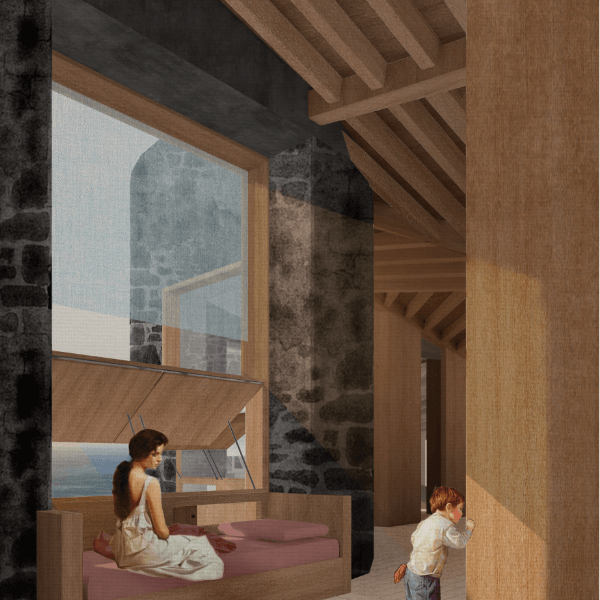
 Materials and image by students Chauhan, Nimmala, Kaloudis, Peppa.
About Javier García-Germán
Author: Camilo Meneses. MCH Manager