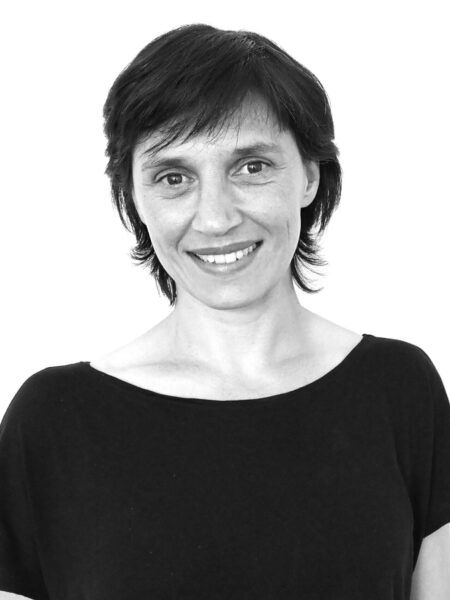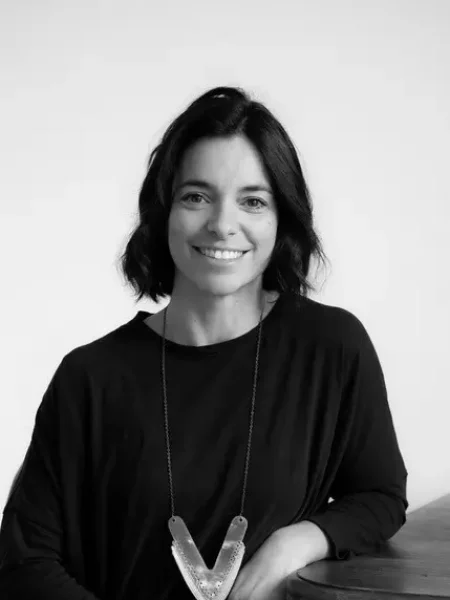
Nerea Amoros Elorduy
Nerea Amorós Elorduy is an architect, urban designer and researcher working at the intersection of architecture, forced displacement and everyday life, with a particular focus on long-term refugee settlements, housing, children, learning and care. She is currently a Distinguished Researcher at the Escola Tècnica Superior d’Arquitectura de Barcelona (ETSAB–UPC), where she leads CAMPS — An Atlas of Long-Term Refugee Camps, a five-year research project funded by a €1.5 million European Research Council Starting Grant. CAMPS develops the first global comparative spatial study of long-term refugee camps, combining geospatial analysis, architectural research, fieldwork and participatory methods to understand how these settlements evolve and are experienced and transformed by their inhabitants.
Trained as an architect at ETSAB–UPC, Amorós Elorduy holds a Master in International Cooperation: Sustainable Emergency Architecture from UIC Barcelona and a PhD from The Bartlett School of Architecture, UCL. Her doctoral research examined long-term refugee camps in East Africa as learning environments, establishing a line of research into the relationship between the home, neighbourhood and wider settlement and young children’s everyday learning and development.
Her research grows directly from architectural practice. She co-founded ASA Studio in Rwanda and later founded Creative Assemblages in Uganda, two architecture and research practices through which she has designed and built dozens of educational and health facilities, alongside projects in housing, refugee settlements and urban environments. Working with communities, governments and organisations including UNICEF, UNHCR and Plan International, her practice combines participatory design with a holistic understanding of sustainability encompassing environmental, social, cultural and economic dimensions. This work has consistently explored architecture not only as a physical intervention but as a means of supporting care, learning, dignity and longer-term social and ecological resilience.
Housing and the domestic environment have been particularly important within this trajectory. Her research examines the home as a central space of everyday life, learning and caregiving in displacement, while her architectural work has tested how small spatial interventions can have wider social effects. In Mugombwa refugee camp in Rwanda, work developed with P+A Arquitectes and Africa Nos Mira received the 2019 COAC Cooperació Prize, supporting the upgrading and repaving of more than 200 refugee homes.
Amorós Elorduy is the author of Architecture as a Way of Seeing and Learning: The Built Environment as an Added Educator in East African Refugee Camps (UCL Press, 2021) and co-editor of Urban Informality: Design, Exchange, Infrastructure & Representation (UCL Press, 2024). She is also a contributor to The Architectural Review, where she has written on architecture, displacement, reconstruction, education and care, and her research has appeared in publications including The Oxford Handbook of Migrant Children and the Child-Centered Approach, Forced Migration Review and Architectural Research Quarterly.
Her architectural and research work has been exhibited internationally at the Venice Architecture Biennale, Oslo Architecture Triennale, Louisiana Museum of Modern Art, Pinakothek der Moderne in Munich, the Ibero-American Biennial of Architecture and Urbanism and Casa de la Arquitectura in Madrid. Her work has received the XIII Ibero-American Biennial Other Coordinates Award, the COAC Cooperació Prize and recognition from the Curry Stone Design Prize, and she was a finalist for the Moira Gemmill Prize for Emerging Architecture. In 2024 she was featured in RIBA’s 100 Women: Architects in Practice.
Alongside practice and research, Amorós Elorduy has taught at the University of Rwanda, UIC Barcelona, The Bartlett at UCL and ETSAB at UPC-BarcelonaTech, and has lectured internationally at institutions including Yale School of Architecture, EPFL and Syracuse University. Through CAMPS, she is now bringing together more than fifteen years of architectural practice, fieldwork and research to develop new ways of understanding long-term displacement spatially, connecting global patterns of settlement with the homes, everyday practices and spatial imaginaries of displaced communities.


 Previous